At a glance: Incense scents fall on a spectrum from bright and energizing (citrus, frankincense) through uplifting florals (lotus, lavender) to calming woods (sandalwood) and deep, enveloping resins (agarwood). Choosing a scent is really choosing an atmosphere — a fresh, focusing lift versus a warm, grounding calm.
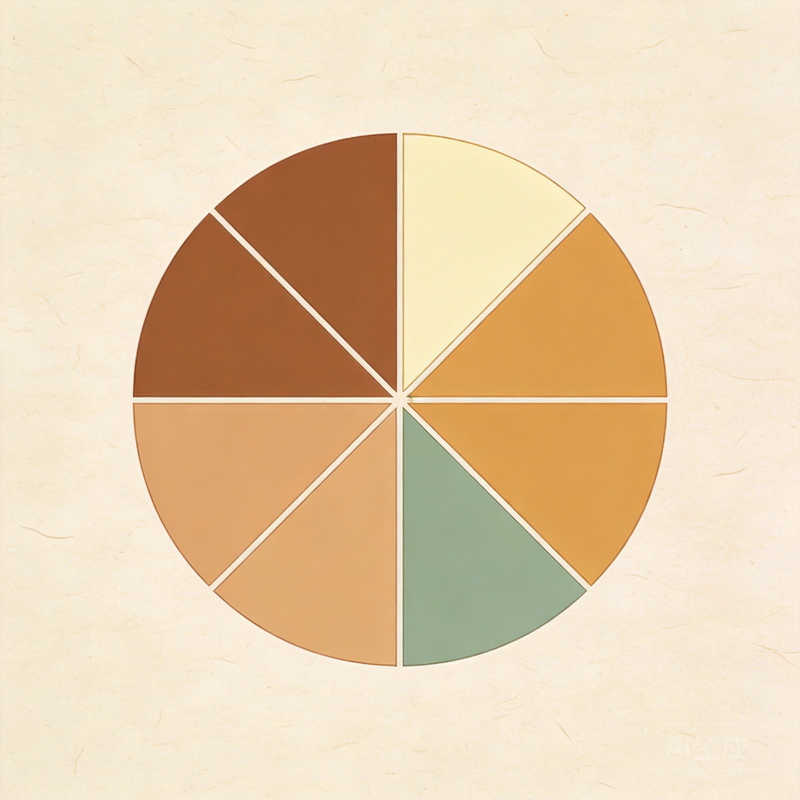
Key facts: The classical Chinese incense canon is built on woods and resins (agarwood, sandalwood, frankincense); florals and citrus are largely modern or symbolic additions. Every scent here is a material or a fragrance evocation, and — importantly — none of them is a medical treatment.
Key Takeaways
- Choosing an incense scent is choosing an atmosphere — bright and focusing on one end, deep and grounding on the other.
- The classical Chinese canon is woods and resins (agarwood, sandalwood, frankincense); florals and citrus are mostly modern or symbolic additions.
- Check the material, not the name — “sandalwood,” “lotus,” and “lavender” on a label can each be a real material or a fragrance accord.
- Atmosphere ≠ intensity — a “calm” wood can be subtle and profound, not weak; a “bright” citrus can be light, not loud.
- No incense scent is a medical treatment; “calming” and “focusing” describe aroma character, not a physiological effect.
The Scent Spectrum at a Glance
| Atmosphere | Reference scents | Character |
|---|---|---|
| Energizing / focusing | Citrus, frankincense | Bright, fresh, clean |
| Uplifting | Lotus, lavender | Light, floral, airy |
| Calming / warming | Sandalwood | Creamy, sweet, woody |
| Deep / enveloping | Agarwood | Resinous, sweet, complex |
The same material can be described two ways: aroma (what it objectively smells like) and atmosphere (the feeling people associate with it). This guide uses the atmosphere framing, because that is how most people actually choose.
Scents by Intention (a Quick Map)
If you know the feeling you want but not the scent, this maps intention to a starting point:
| You want… | Start here |
|---|---|
| Bright, focused, clear-headed | Citrus, frankincense |
| Warm, calm, grounded | Sandalwood |
| Deep, quiet, enveloping | Agarwood |
| Soft, floral, uplifting | Lotus, lavender |
| Sweet, romantic, lush | Jasmine, rose |
This is a starting point, not a rule — the same scent can serve different moods for different people, and “calming” vs “focusing” describes aroma character, not a measured effect.
Decision Tree: From Feeling to Scent
A fast path from intention to a starting scent:
Do you want to feel more alert or more settled?
├─ More alert / clear-headed
│    └─ Bright & focusing → citrus, frankincense
│         (light, fresh, clean — best on a gentle heater)
└─ More settled / grounded
     ├─ Warm & calm → sandalwood
     │    (creamy, sweet, woody — the classic base)
     ├─ Deep & quiet → agarwood
     │    (resinous, sweet, complex — the most precious)
     └─ Soft & gentle → lotus, lavender
          (floral, airy — usually a fragrance accord, check the label)
The tree ends at a scent family, not a product — from there you still confirm the material behind the label. “Atmosphere” is a starting point, not a measured effect.
The Scents, One by One
- Sandalwood (檀香) — creamy, sweet, soft-woody. The classic “calm, warm” base; also the most substituted material (know your species).
- Agarwood (沉香) — deep, resinous, sweet. The most precious incense material; the “sinking fragrance” with the 奇楠 top grade.
- Frankincense (乳香) — fresh, resinous, citrus-woody. The “bright, focusing” resin of ritual; the opposite of a sleepy scent.
- Lavender — soft, floral, herbal. The modern Western “unwind” note; a wellness ritual, not a treatment.
- Lotus (莲花) — fresh, subtle, floral. The symbol of purity (出淤泥而不染); usually a floral accord in incense.
- Citrus (柑橘) — bright, zesty, energizing. The top note that fades fast, so usually blended; 陈皮 is its Chinese material link.
The Three Classical Materials, Compared
The Chinese canon rests on three materials worth telling apart at a glance:
| Material | Character | Atmosphere | Relative price | Buyer caution |
|---|---|---|---|---|
| Agarwood 沉香 | Deep, resinous, sweet, complex | Deep / quiet / enveloping | Highest — 奇楠 is the top of the market | The most-faked material; price is the first check |
| Sandalwood 檀香 | Creamy, sweet, soft-woody | Warm / calm / grounded | Mid — real Santalum album is scarce | Many substitute species share the name |
| Frankincense 乳香 | Fresh, resinous, citrus-woody | Bright / focusing / clear | Low–mid | Usually real resin; watch for fragrance-oil “frankincense” sticks |
“Relative price” is a directional signal, not a price list — and none of the three is a medical treatment.
How to Choose: Match the Atmosphere, Not the Label
- Start from the atmosphere you want — a bright, focusing lift (citrus/frankincense) or a warm, grounding calm (sandalwood/agarwood).
- Check the material, not just the name — “sandalwood,” “lotus,” and “lavender” on a label can all be fragrance accords rather than the real material.
- Mind the burn form — a bright citrus note shows best on a gentle electric heater; a deep wood can carry a charcoal or stick burn.
- Confirm the compliance reality — no incense scent is a medical treatment. Fragrance supports a routine; it is not medicine.
A Note on the Classical Canon
The classical Chinese incense tradition (香谱) is built on woods and resins — agarwood, sandalwood, frankincense, myrrh. Florals (lotus, lavender) and citrus are largely modern or symbolic additions. Knowing this helps you read a product honestly: a “lotus” or “citrus” incense is usually a modern scent, while “agarwood” or “sandalwood” points at a material tradition.
Why This Guide Reads Different (vs. “Best Scent for X” Lists)
Most “incense scent guides” are really affiliate roundups — “best calming incense,” “best focus incense” — that rank products and attach health claims. This guide does neither: it maps aroma to atmosphere, tells you to check the material, not the name, and makes no health claims. That is the honest version, and it is the one worth trusting.
How a Scent Develops: Top, Body, Dry-Down
A good incense does not smell the same from start to finish — it unfolds. The classical Chinese vocabulary names three stages, the same structure perfumery uses:
- 头香 (tóu xiāng, “head”) — the first impression as the material begins to release. Bright, volatile, and short-lived.
- 本香 (běn xiāng, “body”) — the main, sustained character; the heart of the scent.
- 尾香 (wěi xiāng, “tail”) — the fading, deeper residue that lingers after the burn.
This is why the same material can be described two ways: what it smells like now (the opening) and what it smells like overall (the full arc). A citrus top note fades fast; a woody base lingers. When you choose a scent, you are choosing an arc, not a single snapshot — which is why “what does it smell like” is a trickier question than it looks.
The Scent Families, Expanded
Beyond the headline scents, the spectrum fills out with a few families worth placing:
| Family | Reference scents | Character | Where it sits |
|---|---|---|---|
| Bright / citrus | Citrus, 陈皮 | Fresh, clean, zesty | Top of the spectrum; fades fast |
| Green / herbal | Mugwort, chrysanthemum | Herbal, slightly bitter | Middle; earthy and calm |
| Floral | Lotus, jasmine, osmanthus, rose | Sweet, heady, or airy | Middle; usually an accord |
| Earthy / woody | Cedar, vetiver, patchouli | Dry, deep, grounding | Lower; smoky and solid |
| Resinous / balsamic | Frankincense, myrrh, benzoin | Bright-balsamic or sweet-warm | Middle-to-base; often a fixative |
| Deep / enveloping | Agarwood, sandalwood | Resinous, sweet, complex | Base; the classical core |
The two ends — bright citrus and deep agarwood — are the poles most people navigate between. The middle families (green, floral, earthy, balsamic) are the nuance. Knowing where a scent sits on this map is the fastest way to predict how it will feel in a room.
Season, Occasion, and Mood
The classical tradition attached scents to seasons and occasions, and the logic still reads clearly:
- Spring — light florals and green notes (a fresh, opening character).
- Summer — cool, clean notes like camphor or borneol against heat.
- Autumn — warm woods and resins (sandalwood, frankincense).
- Winter — deep, enveloping agarwood and rich blends.
These are associations, not rules, and they describe atmosphere rather than any measured effect. The useful version for a modern buyer is simpler: match the scent’s weight to the moment — a light citrus for daytime focus, a warm wood for evening wind-down. Weight, not season, is what most people are actually choosing. And weight is not intensity: a light scent is not necessarily weak, and a deep scent is not necessarily loud. A subtle agarwood can fill a room with quiet presence, while a bright citrus can be soft and airy. The axis is weight, not volume.
Common Mistakes
- Choosing by name alone. Confirm the actual material or accord behind the label.
- Expecting a “calm” scent to be weak, or a “bright” scent to be strong. Atmosphere ≠ intensity; agarwood is subtle but profound.
- Treating scent as medicine. “Calming” and “focusing” describe aroma character, not a therapeutic effect.
The Author’s Take
Position: The most valuable thing this guide does is separate aroma from atmosphere — what a scent objectively smells like versus the feeling people attach to it.
Reasoning:
- Most buyers choose by atmosphere, and that is fine — as long as no one pretends the feeling is a measured effect.
- Check the material behind the name: “sandalwood,” “lotus,” and “lavender” can each be a real material or a fragrance accord.
This is the author’s editorial view and experience — not a verified fact.
Verification Notes
- All scent descriptors are qualitative; “calming,” “energizing,” “uplifting” describe aroma association, not physiological effects.
- The classical-canon framing (woods/resins vs modern florals/citrus) is a cultural-historical observation.
- No therapeutic claims are made on this page or any linked page.
Cluster directory
- Agarwood Grading: 沉香, 沉水, and 奇楠 — the Definitive Reference
- Agarwood Incense (沉香): The Sinking Fragrance, Grading, and How to Spot Fakes
- Citrus Incense (柑橘): The Bright, Energizing Top Note
- Frankincense Incense (乳香): The Resin of Bright, Focusing Rituals
- Incense Material Comparison Matrix: 7 Classical Materials at a Glance
- Lavender Incense: A Western Scent in the Modern Incense Lineup
- Lotus Incense (莲花): The Floral Note of Purity and Lift
- 奇楠 (Qinan / Kyara): The Grade English Calls by a Japanese Name
- Sandalwood Incense (檀香): Aroma, Species, and How to Read the Claims
- The Incense Scent Wheel: Atmosphere → Scent → Scenario
FAQ
Q: What is the best incense scent for focus?
Citrus and frankincense are the classic “bright, focusing” scents — fresh, clean, and clear rather than heavy or sleepy. The logic is atmospheric, not medical: a bright top note feels alert and open, which suits study or work, whereas a deep resin feels enclosing. But “focus” is personal, so treat this as a starting point rather than a prescription. The more useful rule is to match the scent’s weight to the task: light and fresh for daytime concentration, warm and grounding when you want to settle. See the citrus and frankincense guides.
Q: What is the most calming incense scent?
Sandalwood is the classic calming, warming wood — creamy, sweet, and smooth — while agarwood is deeper and more enveloping. “Calming” here describes aroma character and the atmosphere people associate with it, not a measured physiological effect or a medical claim. A warm, familiar scent can be a pleasant part of an evening routine, but no incense is a treatment for anxiety or insomnia. Choose by the atmosphere you want — warm and grounded (sandalwood) or deep and quiet (agarwood) — and treat any “clinically calming” claim with skepticism.
Q: Are floral incense scents traditional Chinese?
Mostly not. The classical Chinese canon is built on woods and resins — agarwood, sandalwood, frankincense, myrrh — with flowers largely a modern or symbolic addition. Lotus carries deep cultural symbolism (purity, 出淤泥而不染), but in classical incense the “lotus” impression was usually built as an accord from woods and herbs rather than the flower, because the flower does not survive combustion. So a “lotus” or “lavender” incense today is usually a modern scent. Knowing this helps you read a product honestly: “agarwood” or “sandalwood” points at a material tradition, while a floral name often points at a modern accord. See what Chinese incense is.
Q: How do I know what I’m actually buying?
Confirm the material or accord behind the label. “Sandalwood,” “lotus,” and “lavender” can each be a real material or a fragrance accord, and the label alone does not tell you which. Ask two questions: which species (for woods and resins), and material versus accord (for florals and fruit notes). A natural binder (makko) suggests a material-based stick; a charcoal base suggests a fragrance stick. Price is also a signal — a very cheap “agarwood” is almost certainly not agarwood. See the substitution cross-reference for the full checklist.
Q: What is the difference between a scent’s aroma and its atmosphere?
Aroma is what the material objectively smells like — creamy, resinous, citrus — while atmosphere is the feeling people associate with it — calm, focused, uplifting. “Calming” and “focusing” describe atmosphere, which is aroma character plus association, not a measured effect. This guide uses the atmosphere framing because that is how most people actually choose: they start from the feeling they want, then find the scent that produces it. The distinction matters because it keeps the language honest — an atmosphere is a starting point for choice, not a claim about what the scent does to a body.
Q: How do I pick a scent if I’m new to incense?
Start from the atmosphere you want — bright and focusing versus warm and grounding — then confirm the material behind the label. Sandalwood is the classic gentle entry point: approachable, warm, and easy to like. Citrus and frankincense are the bright alternatives if you want a fresh, clear lift rather than a warm calm. Once you have one scent you like, use it as a reference point: note whether you want something lighter or deeper, and move along the spectrum from there. The goal is to learn your own preference, not to memorize a list.
Sources
- 周嘉胄《香乘》(Ming) — the classical scent canon (woods and resins). Full text on Wikisource.
- 洪芻《香谱》(Song) — the canonical manual. Full text on Wikisource.
- 本草纲目 — historical materia-medica record for the named materials (traditional, not clinical). Full text on Wikisource.
- Editorial synthesis of established incense scent-pairing practice; descriptors are qualitative, not physiological-effect claims.
- Botanical references for the woods/resins/florals named in the guide.
Related Resources
Natural next step: picked a scent? Learn how to use it well — see what Chinese incense is for form and technique, or incense for meditation if you are choosing for a practice.