
How Commercial Incense Manufacturing Is Structured
This page explains, in neutral terms, how commercial Chinese botanical incense is manufactured and quality-controlled. It is a knowledge explainer, not a sales page — there is no quote process, no catalog, and nothing to buy here.
The product formats
The same botanical materials reach the market in several physical forms, each with a different burn behavior and use:
- Incense sticks (线香) — the common modern format.
- Incense cones (塔香) and coils (盘香).
- Sachets (香囊) — scented pouches, worn or placed rather than burned.
- Raw materials (香材) — woods, resins, herbs, and flowers, supplied whole, chipped, or powdered.
These formats sit on top of a documented ingredient reference of 150 botanical entities, organized by material family, on the ingredient encyclopedia. This page adds no material claims beyond what is already published there.
Materials and the authenticity question
Incense begins with the material, and the useful question is what the material is — species, part, and grade — not what it is called. The discipline is the same one documented in the authentication database: match the material form to the downstream process (whole, chip, powder, resin), and verify species and grade rather than trusting a trade name.
Because botanicals are natural materials, not standardized chemicals, the same name can cover real variation. A "sandalwood" may be Santalum album, another Santalum species, or a synthetic fragrance; a "borneol" may be a natural crystal, a leaf-distilled extract, or a synthetic isomer mixture. The substitution cross-reference maps these label traps.
The handmade process
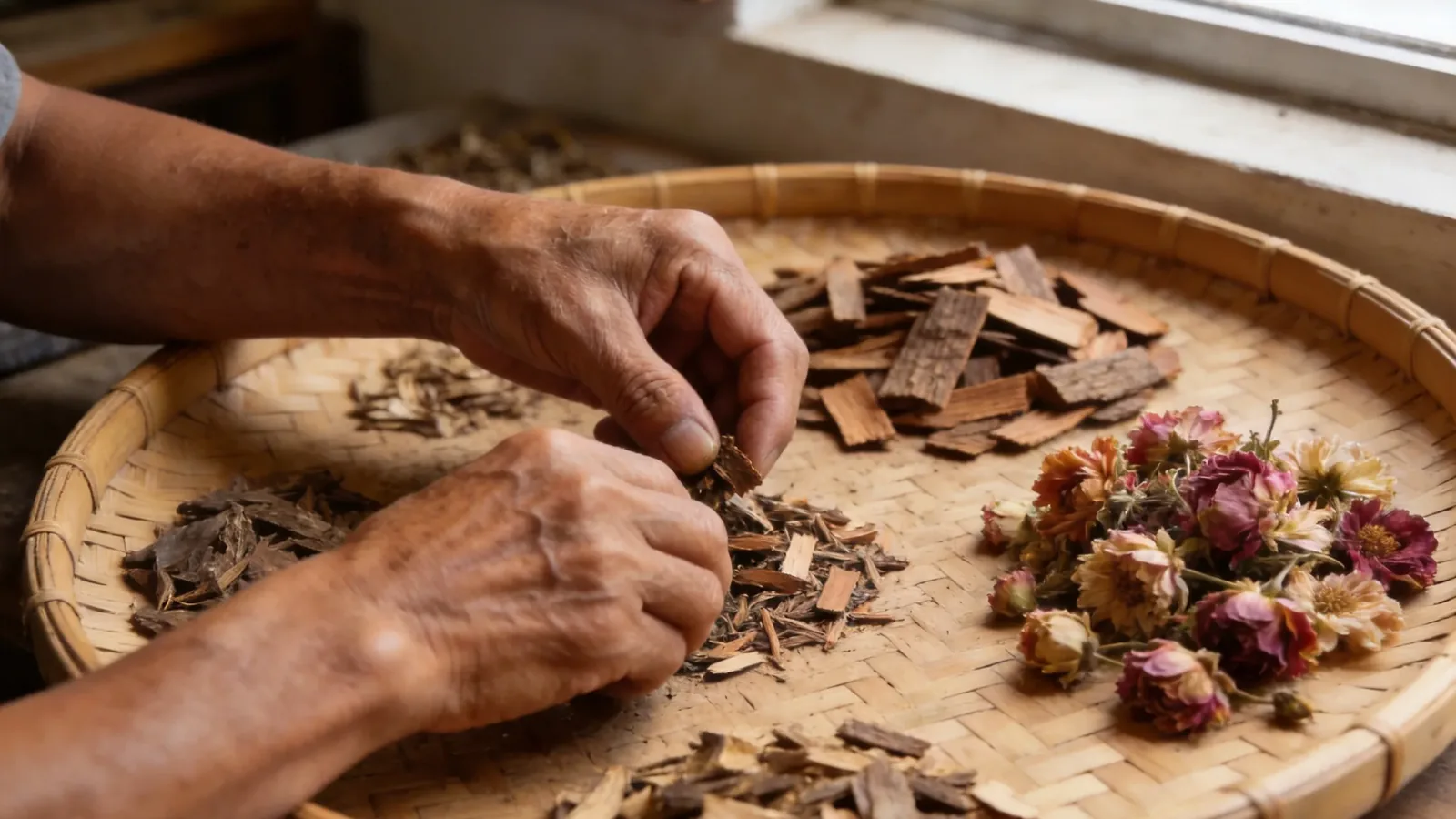
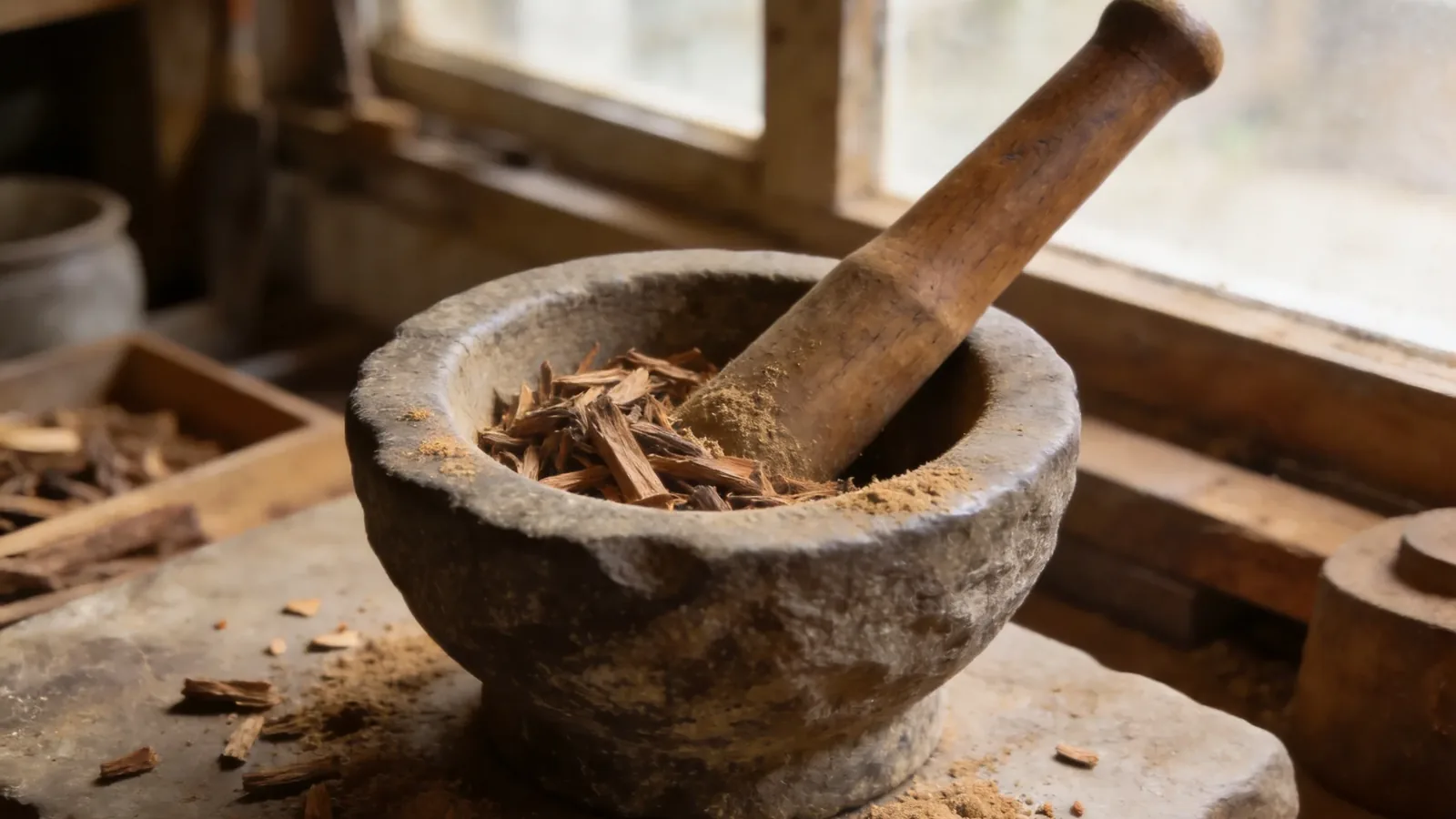
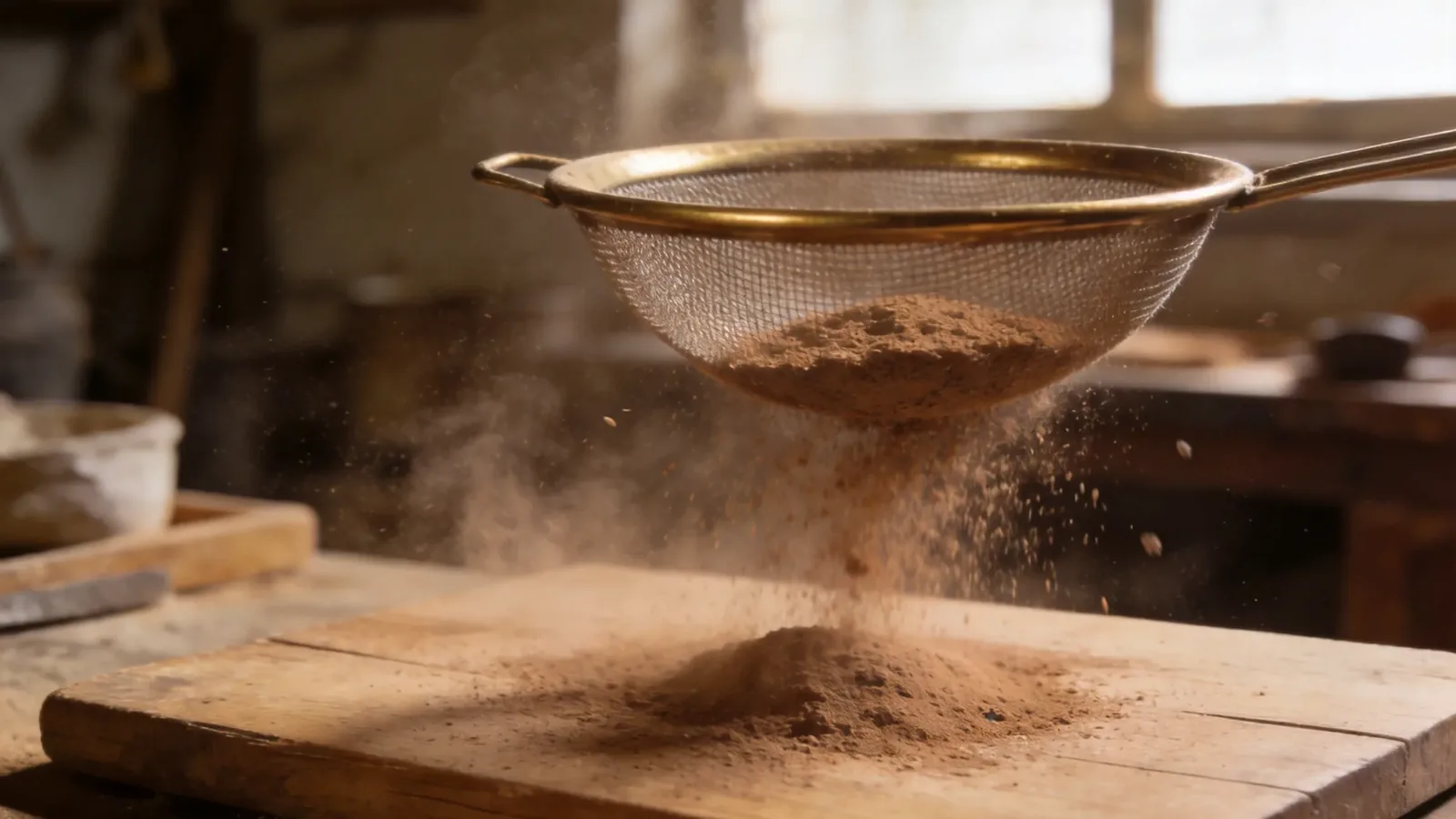
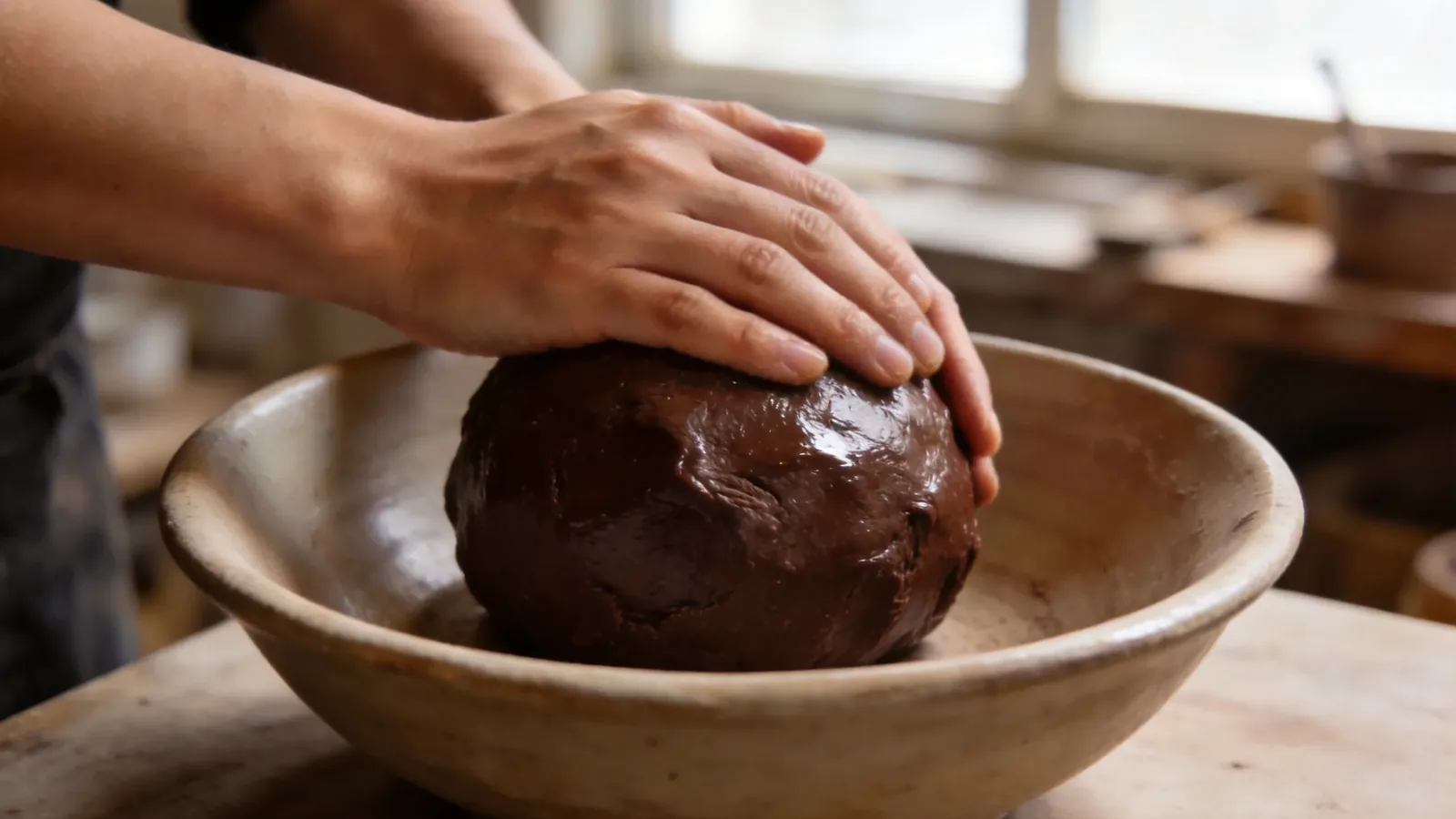
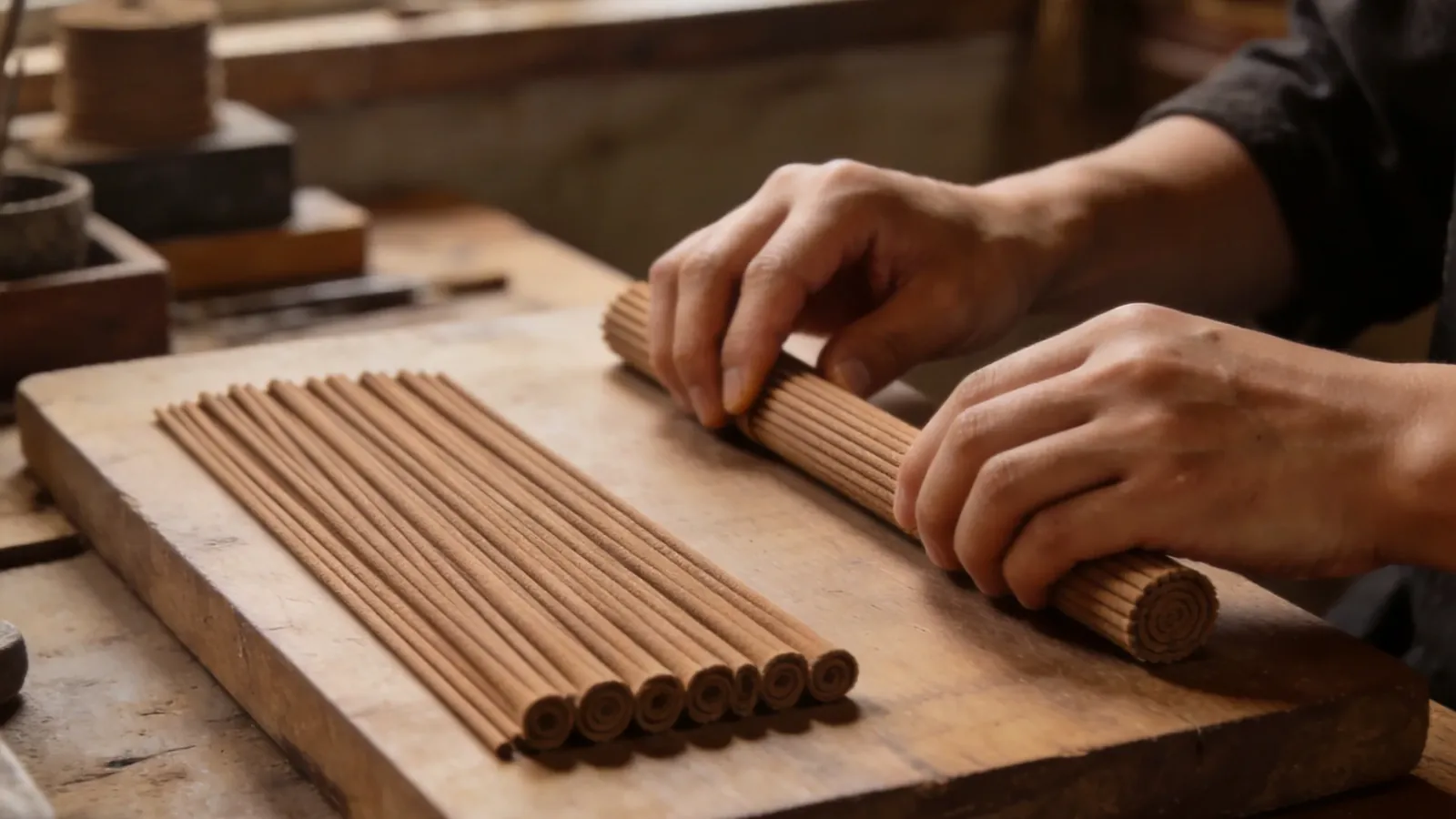
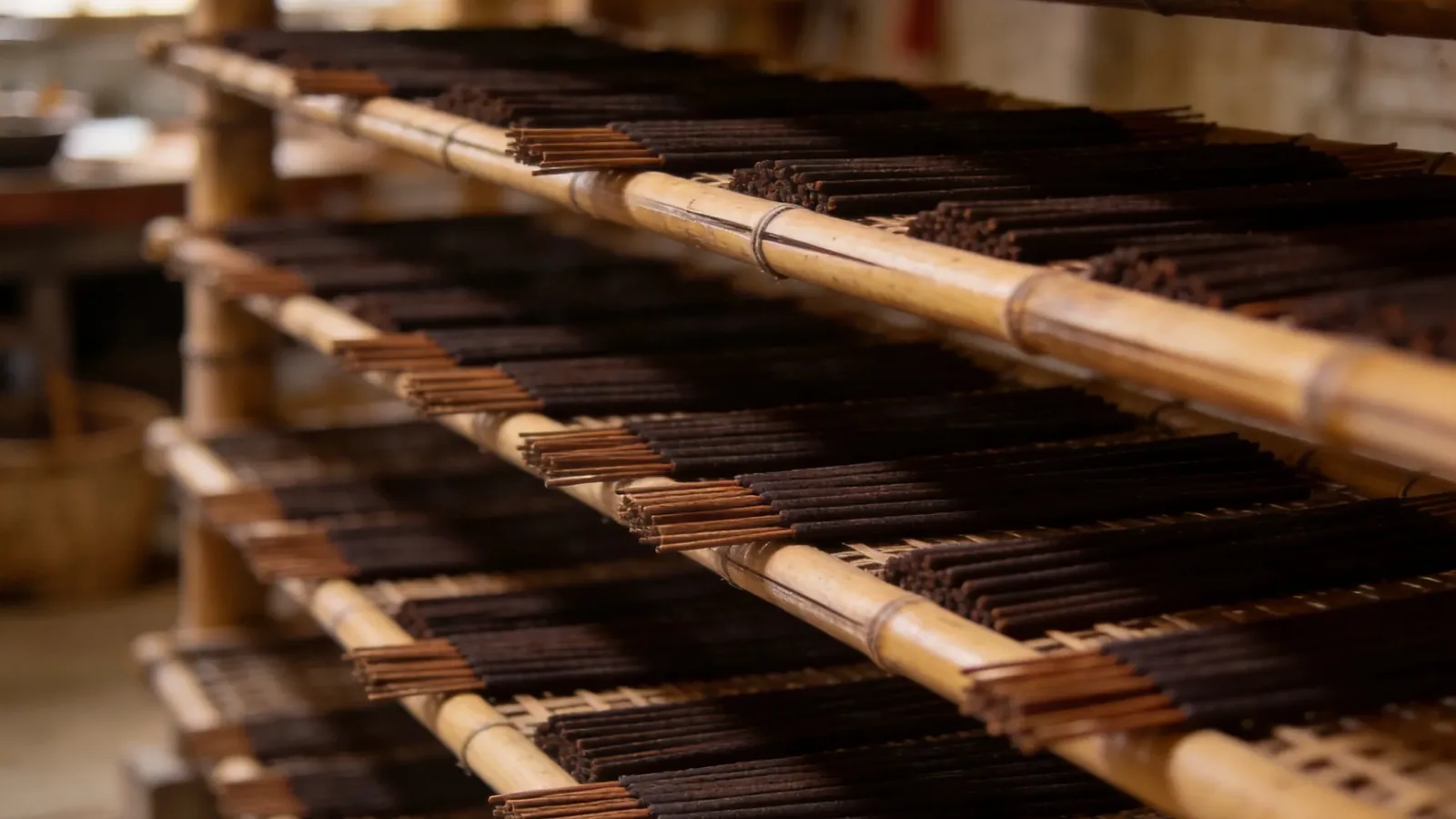
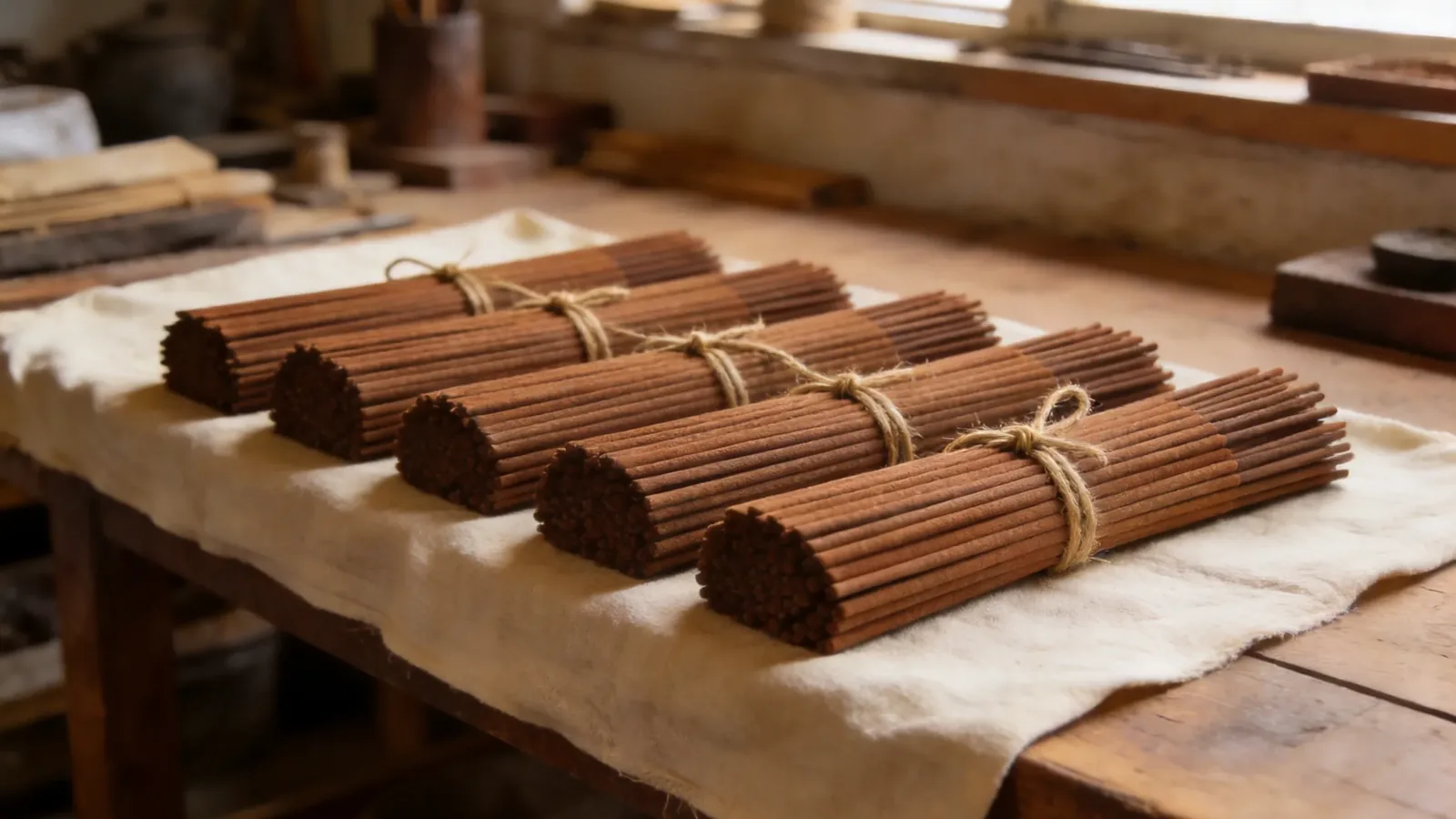
These images illustrate the traditional handmade incense process — sorting, grinding, sieving, blending, rolling, drying, and finishing.
Quality control: three stages
Quality control in incense follows a three-stage process: incoming inspection (verifying species, grade, and adulteration when material arrives), in-process control (holding blend, particle size, moisture, and forming steady during production), and final inspection (checking the finished product against the agreed specification before release).
The product you reorder is the consistency, not the individual stick. The variables that matter — material consistency, particle size, moisture, density, and burn behavior — are the same ones documented in the how incense is made guide and the form-and-use references.
Further reading
For the craft itself, start from how incense is made, the 合香 blending system, and the materials, techniques & forms taxonomy. For the material identity behind any incense, begin at the ingredient reference.