Definition: To choose incense well, work through four questions in order: what do you want it for (intention), which format fits that (stick, cone, coil, resin, beads), what material is actually in it (wood/resin vs fragrance oil), and how much smoke you can tolerate. Then confirm the scent by its material, not its name.
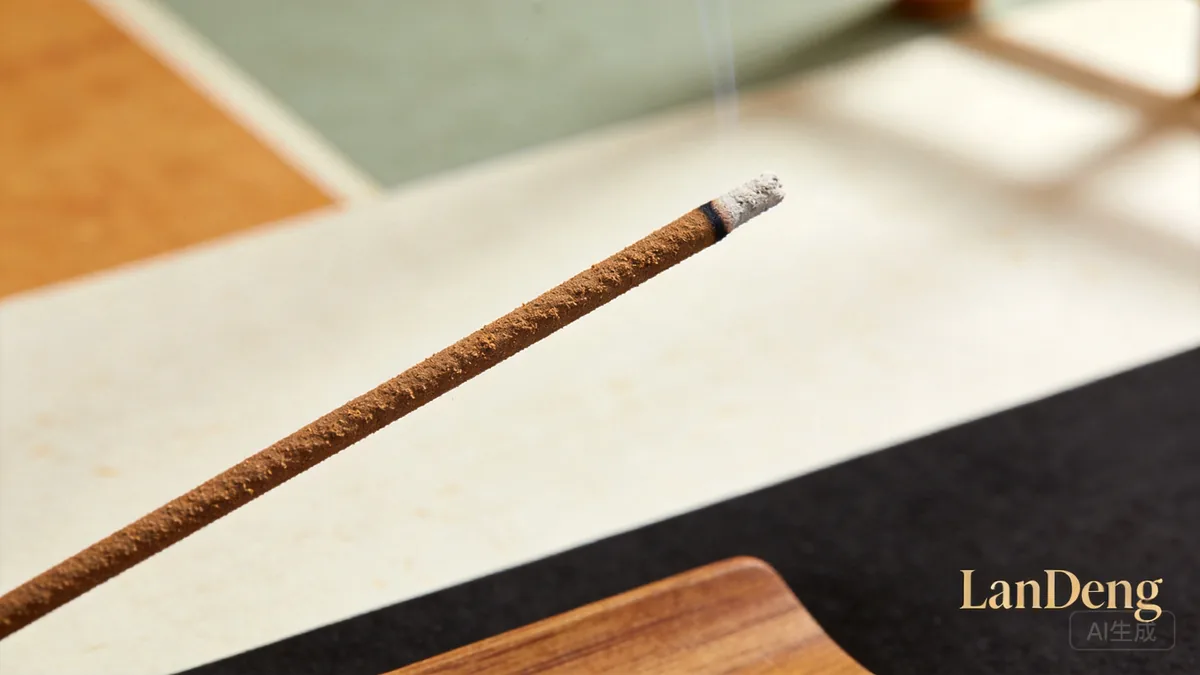
Key facts: This is a buying guide, not a product list. It gives you the decision framework — intention → format → material → smoke — and tells you what to check on a label, with no affiliate rankings and no health claims.
Key Takeaways
- Choose in this order: intention → format → material → smoke.
- Check the material, not the name — “sandalwood” can be real wood or a synthetic fragrance.
- “Natural” is unregulated — read the ingredients, not the word.
- Match the burn time to your session (stick ~20–60 min, cone ~10–15 min, coil hours).
- This guide sells no products and makes no health claims.
Step 1: Intention
What are you buying it for?
- Focus / work → a bright scent (citrus, frankincense).
- Unwinding → a warm scent (sandalwood, lavender).
- Home ambiance → a clean, room-filling scent (cedar, sandalwood).
- Meditation / yoga → a calm, grounding scent (sandalwood, agarwood).
See incense by intention and the scent guide for the mapping.
Step 2: Format
Match the format to the session length and smoke tolerance:
- Stick — ~20–60 min, the default.
- Cone — ~10–15 min, short.
- Coil — hours, long steady scent.
- Resin/powder — heated, smoke-light, pure material.
- Beads — worn, zero smoke.
See which incense format for the full comparison.
| Format | Typical burn | Smoke | Best for |
|---|---|---|---|
| Thin / coreless stick | ~20–40 min | Low–moderate | Short, focused sessions |
| Standard stick | ~30–60 min | Moderate | Everyday use |
| Cone | ~15–30 min | Moderate | Quick sessions, visual effect |
| Coil (盘香) | ~1.5–4 hours | Moderate | Hours of continuous scent |
| Resin / powder (heated) | Session-based | Minimal (electric) | Low-smoke, pure material |
Step 3: Material (the one that matters most)
The same label can mean very different products:
- Real material — sandalwood powder, frankincense resin, a masala blend. The scent is the actual plant.
- Fragrance oil — a manufactured scent (often synthetic) on a neutral base. Cheaper, stronger, uniform.
The honest signals are the ingredient list, the burn/after-smell, and price — real sandalwood or agarwood is far more expensive than a fragrance-oil stick. See natural vs synthetic.
Step 4: Smoke
Every burned incense produces smoke and particulate matter. Decide how much you can tolerate:
- Lower smoke — thin coreless sticks, resin on an electric heater.
- More smoke — bamboo-core sticks, backflow cones, bakhoor on charcoal.
Ventilation is always the rule. See incense safety.
The Decision Tree (Shortcut)
If the four steps feel like a lot, this is the compressed version:
What is the incense for?
├─ Focus / work / study
│    └─ citrus or frankincense, low smoke
│         → a thin stick or electric-heated resin
├─ Unwinding / evening
│    └─ sandalwood or lavender, warm and soft
│         → a standard stick (20–60 min) for the whole evening
├─ Meditation / yoga / sitting
│    └─ sandalwood or agarwood, grounding
│         → match the burn to the sit: stick for 20–40 min, coil for longer
├─ Home ambiance (background)
│    └─ cedar or sandalwood, clean and room-filling
│         → a coil for hours of continuous scent
└─ A gift / unsure
     └─ a real sandalwood stick — the classic gentle entry point
At every branch, the same three checks apply: confirm the material (not the name), match the burn time to the session, and ventilate. No branch requires a specific brand or a “medical-grade” claim.
A Short Checklist
- I know the intention (focus / unwind / ambiance / practice).
- The format matches my session length.
- The label names the actual material (or I’ve asked).
- I understand it’s fragrance or material — and priced accordingly.
- I have a holder and a ventilated, heatproof spot.
Why This Guide Reads Different (vs. Affiliate “Best Incense” Lists)
Most “how to choose incense” content is an affiliate listicle ranking products. This guide gives you the framework instead — intention, format, material, smoke — so you can evaluate any incense honestly, including ours someday. No rankings, no commissions, no health claims.
Common Mistakes
- Choosing by name alone. Confirm the material behind the label.
- Buying the cheapest “sandalwood” and expecting real wood. Cheap = fragrance oil.
- Ignoring burn time. A cone for a 45-minute session will be over too soon.
The Author’s Take
Position: The honest buying guide is the highest-leverage page a content-first brand can write.
Reasoning:
- Teach the four questions (intention → format → material → smoke) rather than publish a ranked list — the framework outlives any product.
- Material is the question that matters most: a name is cheap, the wood or resin behind it is where value and honesty live.
This is the author’s editorial view and experience — not a verified fact.
Verification Notes
- Burn times are ranges; check specific products.
- The material-vs-fragrance distinction and price signals are standard trade observations.
- No products are ranked or sold, and no health claims are made.
Cluster directory
- Incense Gift Guide: How to Choose a Thoughtful (and Honest) Incense Gift
- Incense Holder & Burner Guide: What You Need for Each Format
- Incense Substitution Cross-Reference: What a Label Name Can Hide
- Natural vs Synthetic Incense: How to Tell the Difference
FAQ
Q: How do I choose incense for the first time?
For a first purchase, keep the decision small and reversible. Decide what the incense is for — focus, unwinding, ambiance, or practice — because that single choice narrows the format and the scent family. Pick a stick format to start; it is easiest to light and time, and needs only a simple holder. Then buy a small quantity of one real material, such as a sandalwood stick, so you learn what genuine wood smells like rather than a synthetic fragrance. Burn it in a ventilated room and note the aroma, the smoke level, and the burn time. That one real-material reference point makes every later choice — citrus, frankincense, agarwood — much easier to judge. See scent by intention.
Q: What should I look for on an incense label?
Look for an ingredient list that names the actual plant or resin — “sandalwood powder” or “frankincense resin” — rather than a vague phrase like “natural fragrance.” The format matters too: a stick, cone, coil, resin, or bead each has a different burn time and smoke level, so confirm the form matches your session. Check the burn time, and note whether the product is a real material or a fragrance oil on a neutral base; price is a rough signal, since genuine sandalwood or agarwood costs far more than a synthetic stick. If the label will not say what is inside, treat that silence as a warning. See natural vs synthetic.
Q: Is expensive incense better?
Not automatically. Price is a signal, not a guarantee. Real materials such as sandalwood and agarwood genuinely cost more than fragrance oil, because the raw wood or resin is scarce and expensive, so a very cheap “sandalwood” stick is almost certainly synthetic. But a high price alone does not prove quality: some expensive products are overpriced fragrance blends or inflated marketing. Judge the material and the burn rather than the number on the tag. Ask what the product actually contains, smell the aroma on gentle heat, and buy from a seller who names the species and origin. Higher price should track real material, not a brand story.
Q: What is the best incense to start with?
A real sandalwood stick is the classic gentle entry point: its creamy, sweet-woody scent is easy to like, it is widely available, and it teaches you what genuine wood smells like versus a synthetic copy. If you want something brighter, citrus and frankincense are the standard alternatives — fresh and clean for focus or morning use. Start with one material at a time so you build a clear reference for each scent, then branch out. Whichever you choose, confirm the label names the actual material, match the burn time to your session, and burn in a ventilated room. See the scent guide.
Sources
- The scent guide, format guide, and natural vs synthetic for the framework’s components.
- EPA indoor air quality — any burned incense releases indoor particulate matter, which is why ventilation is the standing rule.
- American Lung Association indoor air pollutants — combustion sources are a recognized indoor-air factor.
Related Resources
- Incense by Intention
- Which Incense Format Is Right for You?
- Natural vs Synthetic Incense
- Incense Gift Guide
Natural next step: buying for someone else? See the incense gift guide — or pick your format first.