Direct answer: Copaiba (古巴香脂, gǔbā xiāngzhī) is the oleoresin tapped from trees of the genus Copaifera, a legume-family (Fabaceae) group native to tropical South America. It yields a woody, balsamic, resinous, slightly sweet balsam used in modern perfumery and aromatherapy. It is a modern crossover, not a classical Chinese incense ingredient.
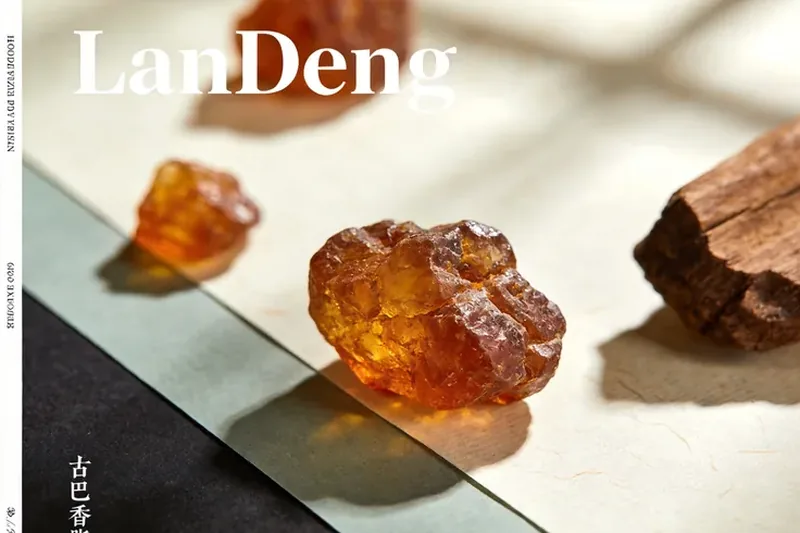
Key facts
| Chinese | 古巴香脂 (gǔbā xiāngzhī); copaiba balsam |
| Botanical source | Copaifera spp. (family Fabaceae) — the tapped oleoresin |
| What it is | A South American tree balsam, not a classical 香脂 |
| Aroma | Woody, balsamic, resinous, slightly sweet |
| Traditional role | None in classical Chinese incense; modern aromatherapy |
Aroma profile
古巴香脂 (copaiba) has a soft, woody, balsamic, resinous scent with a gentle, slightly sweet, almost creamy warmth — a mild, honeyed-wood balsam rather than a sharp pine or smoke. It is smoother and lighter than the heavier, vanilla-sweet Peru balsam.
A provenance note (read this)
古巴香脂 (copaiba) is a modern crossover, not a classical Chinese 香材:
- Copaifera is a tropical South American genus (Fabaceae), not native to China, and Flora of China does not record it.
- The Chinese name 古巴香脂 (“Cuba balsam”) is a modern trade name; the balsam is tapped mainly from South American Copaifera species, not from Cuba specifically.
- Copaiba balsam entered fragrance and aromatherapy through modern Western practice, absent from the classical 香材 canon.
This page records it honestly as a modern South American balsam — no classical Chinese origin is claimed, and none is fabricated.
Botanical source and origin
Copaifera is a genus of large legume-family trees (Fabaceae) native to tropical South America and parts of Africa. The balsam is a natural oleoresin tapped from the trunk, collected much like a tree sap, and used directly or steam-distilled for copaiba oil. GBIF records the genus Copaifera (several species, all South American natives). It is not a Chinese species and has no classical Chinese record.
In modern use
- Aromatherapy and perfumery: copaiba balsam and oil are used as a soft, woody, balsamic base note and a modern aromatherapy resin.
- Fragrance fixative: the balsam can act as a mild fixative in modern blends.
- Not classical Chinese incense: copaiba has no place in the classical 香材 canon; its Chinese name and use are modern.
Traditional use vs modern evidence
There is no classical Chinese incense record for 古巴香脂 (copaiba); its position is entirely modern. We make no medical claims. The documented facts are botanical identity, the Fabaceae placement, and its modern aromatherapy role.
Quality and sourcing notes
Practical points for buyers:
- 古巴香脂 (copaiba) is the tapped oleoresin of Copaifera spp.; expect a soft, woody, balsamic, resinous, slightly sweet scent.
- Distinguish it from Peru balsam (Myroxylon balsamum) — another South American balsam, but denser and vanilla-sweet.
- It is a modern balsam note, not a classical Chinese 香脂 (such as 安息香 or 乳香).
Safety
Incense combustion produces smoke and particulate matter. Burn in a well-ventilated space, avoid inhaling concentrated smoke, and keep away from children and pets. This is editorial knowledge content, not medical advice.
FAQ
What is 古巴香脂 (copaiba)? The oleoresin tapped from trees of the genus Copaifera, a legume-family (Fabaceae) group native to tropical South America. It yields a soft, woody, balsamic, resinous, slightly sweet balsam used in modern perfumery and aromatherapy.
Is 古巴香脂 a classical Chinese incense ingredient? No. Copaifera is a South American genus, not native to China, and it has no place in the classical 香材 canon. Its Chinese name 古巴香脂 is a modern trade name, and its use entered fragrance through modern Western practice.
Where does the name 古巴香脂 come from? It is a modern Chinese trade name meaning “Cuba balsam,” though the balsam is tapped mainly from South American Copaifera species rather than from Cuba specifically. The name reflects trade, not botanical origin.
What does copaiba smell like? Soft, woody, balsamic, and resinous, with a gentle, slightly sweet, almost creamy warmth — a mild, honeyed-wood balsam. It is smoother and lighter than the heavier, vanilla-sweet Peru balsam.
How is copaiba used in fragrance? As a soft woody-balsamic base note and a mild fixative in modern aromatherapy and perfumery, usually from the balsam or copaiba oil. It is a modern addition, not a classical 香材.
See also: peru-balsam (秘鲁香脂), benzoin (安息香), labdanum (岩蔷薇), and the full scent guide.
Evidence & Sources
Botanical identity
Source: Copaifera on GBIF. Evidence type: Established (genus-level; Copaifera spp. are South American natives).
Modern use
Source: copaiba balsam/oil as a woody-balsamic aromatherapy and perfumery note; a modern crossover with no classical Chinese incense record. Evidence type: Modern aromatherapy — no classical Chinese record; none claimed.
Authenticity / provenance
Source: 古巴香脂 (copaiba, Copaifera spp.) vs Peru balsam (Myroxylon balsamum) — distinct South American balsams. Evidence type: Practical screening.
Safety
Source: incense combustion produces smoke and particulate matter; burn in a well-ventilated space. Evidence type: Established.
Evidence status
| Layer | Status |
|---|---|
| Botanical identity | Established (genus) |
| Traditional use | None (modern aromatherapy) |
| Authenticity test | Practical screening |
| Health claims | Not established |
Sources
Sources: botanical references on the genus Copaifera. 古巴香脂 (copaiba) is a modern South American balsam with no classical Chinese incense record; no such origin is claimed. This is editorial knowledge content, not medical advice.