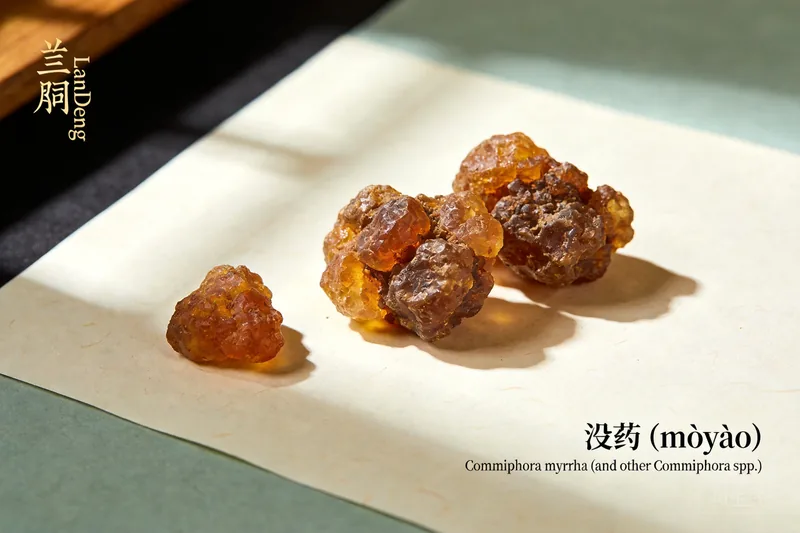
Technical answer: Myrrh — mòyào (没药) in Chinese — is the aromatic gum-resin of Commiphora trees (family Burseraceae), most classically Commiphora myrrha. It has been traded and used for millennia in perfume, incense, and traditional medicine.
Key facts
| Chinese | 没药 (mòyào) |
| Botanical source | Commiphora trees (Burseraceae) — primarily C. myrrha |
| What it is | A dried gum-resin (not a wood or flower) |
| Aroma | Balsamic, earthy, bitter, slightly medicinal |
| Traditional role | Perfume, incense, food flavoring, oral/ritual use |
Aroma profile
Myrrh has a warm, balsamic, earthy aroma with a bitter, slightly medicinal edge — darker and heavier than frankincense. It is often blended with frankincense, which brightens and balances it.
In Chinese tradition
- Incense and perfume: myrrh is a classic resin incense ingredient and perfumery material.
- Traditional pairing: in Chinese materia medica, 没药 (myrrh) is classically paired with 乳香 (frankincense); the two are commonly mentioned together.
- Oral/ritual use: myrrh has a long record of use for oral and ritual purposes across multiple traditions.
Traditional use vs modern evidence
Myrrh is described in traditional systems (Chinese, Ayurvedic, and others) for oral health, wounds, and inflammation. There is some modern research (e.g. on mouthwash use), but most broader medicinal claims remain traditional or preliminary, not established clinical fact.
Important: we describe myrrh’s traditional and incense use; we do not make medical claims.
Botanical note (disambiguation)
“Myrrh” can be confused with other Commiphora resins (bdellium, guggul, opopanax), and “myrrh beads” (from an unrelated African tree) or the herb “sweet cicely” (Myrrhis odorata) are different things entirely. In an incense context, “myrrh” means the resin of Commiphora.
Harvest & processing
Myrrh is collected by making incisions in the bark of Commiphora trees; the tree exudes a pale resin that hardens into reddish-brown tears or irregular lumps, which are harvested by hand. The resin is then sold whole, ground to powder, or steam-distilled for essential oil.
Forms & grades
Myrrh reaches the market in a few forms:
- Tears / lumps — the whole dried resin, preferred for gentle heating.
- Powder — ground resin, used for blending into incense pastes.
- Essential oil — the steam-distilled volatile fraction, used in perfumery.
Higher grades are clean, well-formed tears; lower grades include dust and mixed fragments. The form matters for how you use it — tears for heating, powder for blending.
Safety
Incense combustion produces smoke and particulate matter. Burn in a well-ventilated space; avoid inhaling concentrated smoke. Do not consume resin based on traditional-medicine claims without professional guidance.
FAQ
What is the difference between myrrh and frankincense? Both are aromatic gum-resins from trees in the Burseraceae family, but they come from different genera and smell quite different. Myrrh is the resin of Commiphora trees, and it reads darker, bitter, and balsamic with a slightly medicinal edge. Frankincense is the resin of Boswellia trees, and it reads fresher, citrus, and creamy. In use they are classically paired — in Chinese materia medica, 没药 (myrrh) is traditionally matched with 乳香 (frankincense), and in incense the two are blended so frankincense brightens and balances myrrh’s heavier, more earthy character. They are related materials, not the same resin.
What does myrrh smell like? Myrrh has a warm, balsamic, and earthy aroma with a bitter, slightly medicinal edge — darker and heavier than frankincense. It reads resinous and grounding rather than bright or citrus, with a depth that lingers. This bitter-balsamic character is why myrrh is often blended with frankincense, which adds a fresher, brighter counterpoint and prevents the myrrh from feeling too heavy or medicinal on its own. In perfumery and incense, myrrh sits as a base or middle note, lending warmth and an earthy richness to wood-and-resin blends. The exact profile varies by Commiphora species and grade.
How do you burn myrrh? Myrrh resin is traditionally warmed on a lit charcoal disc or, more gently, on an electric incense heater. To burn it on charcoal, place the disc in sand or ash on a heatproof surface, light it until it glows, then set small pieces of myrrh resin on top — the resin melts and releases fragrant smoke. The electric-heater method is slower and lower in smoke, which many people prefer indoors. Use small pieces at a time, since a little myrrh goes a long way and it can burn harshly if overheated. It is often blended with frankincense, which brightens the scent and balances myrrh’s bitter, earthy edge.
Is myrrh a wood? No — myrrh is a dried gum-resin collected from the bark of Commiphora trees, not the wood itself. The tree is tapped by cutting the bark, and the resin that exudes is what becomes myrrh, hardening into reddish-brown tears or lumps. This is the same general process as frankincense, though the two resins come from different genera. The word “myrrh” in an incense context always refers to this resin, not to wood, and it should not be confused with unrelated materials such as “myrrh beads” from an African tree or the herb sweet cicely (Myrrhis odorata).
Is myrrh used in Chinese incense? Yes — myrrh, 没药, is a classic resin in Chinese blended incense (合香) and traditional materia medica, where it is classically paired with frankincense (乳香). The two resins are commonly mentioned together, with myrrh contributing a bitter-balsamic depth and frankincense adding a brighter, fresher note. Myrrh’s warm, earthy character makes it a useful base or supporting note in wood-and-resin blends. Beyond incense, myrrh has a long record of use in perfume and traditional medicine across multiple traditions, though most medicinal claims remain traditional or preliminary rather than established clinical fact.
What is the difference between myrrh and opopanax? Both are resins from Commiphora trees, but they are distinct materials with different scent profiles. Opopanax, sometimes called “sweet myrrh,” has a sweeter, more balsamic-sweet and slightly powdery character, while myrrh proper is more bitter, earthy, and medicinal. The two come from different Commiphora species, and they play different roles in perfumery: opopanax leans sweet and ambery, while myrrh leans dark and resinous. Because both are called myrrh in some older texts, the terms are easy to confuse, but in a modern incense or perfume context they are treated as related yet separate resins.
See also: frankincense, myrrh’s classical partner, the frankincense incense guide, and the full scent guide.
Evidence & Sources
Botanical identity
Source: Commiphora myrrha on GBIF. Evidence type: Established.
Traditional Chinese use
Source: 本草綱目 (Bencao Gangmu) full text on Wikisource and this page’s record that 没药 (myrrh) is classically paired with 乳香 (frankincense). Evidence type: Historically documented — traditional materia-medica language, not modern clinical evidence.
Commercial grading
Source: the forms & grades (tears / powder / essential oil; clean well-formed tears grade higher). Evidence type: Trade terminology.
Authenticity / adulteration
Source: the Commiphora disambiguation (bdellium, guggul, opopanax vs “myrrh beads” and sweet cicely). Evidence type: Practical screening.
Safety
Source: incense combustion produces smoke and particulate matter; do not consume resin based on traditional-medicine claims without professional guidance. Evidence type: Established.
Evidence status
| Layer | Status |
|---|---|
| Botanical identity | Established |
| Traditional use | Historically documented |
| Commercial grading | Trade terminology |
| Authenticity test | Practical screening |
| Laboratory confirmation | Requires analytical testing |
| Health claims | Not established |
Sources
Sources: botanical and pharmacological references on Commiphora. Medicinal claims are treated as traditional/preliminary, not established clinical fact. This is editorial knowledge content, not medical advice.