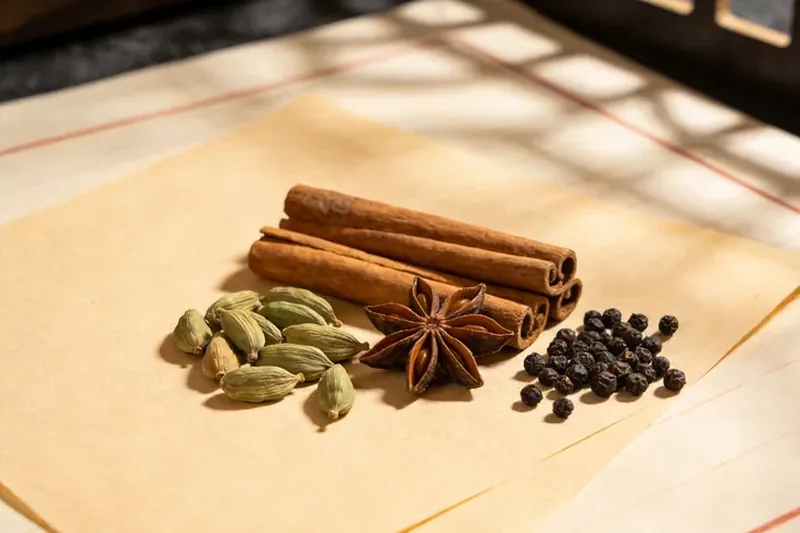
Direct answer: Prickly ash (蜀椒, shǔjiāo) is the dried fruit husk of Zanthoxylum bungeanum, a prickly-ash tree of the rue family (Rutaceae) native to central and western China. It is the source of Sichuan pepper (花椒), with a citrusy, woody aroma and the distinctive numbing sensation of hydroxy-α-sanshool. In classical Chinese incense it is the “椒” that the Xiangcheng (香乘) counts among the earliest aromatics of Chinese antiquity.
Key facts
| Chinese | 蜀椒 (shǔjiāo); also 花椒 |
| Botanical source | Zanthoxylum bungeanum (family Rutaceae) — the dried fruit husk |
| What it is | A dried spice husk, not a wood or resin |
| Aroma | Spicy, citrus, woody, numbing |
| Traditional role | Classical early aromatic (椒); culinary spice |
Aroma profile
蜀椒 is spicy and citrusy with a woody undertone and a distinctive numbing, tingling quality — the trademark of the Zanthoxylum genus, which sets it apart from true pepper. The aroma is bright and warm rather than hot, and the numbing sensation is a mouth-feel, not a scent; in incense the husk contributes a warm, citrus-spicy lift. It is one of the oldest aromatics recorded in Chinese culture.
The 椒 of antiquity (read this)
The single character 椒 (pepper/pepper-tree) appears at the very start of the Chinese aromatic record. The Xiangcheng (香乘), opening its discussion of 香品 (aromatic materials), notes that “before the Qin and Han, only 兰蕙椒桂 were spoken of” (秦漢已前未聞惟稱蘭蕙椒桂而已) — orchid, melilot, pepper, and cinnamon as the four earliest named aromatics. The 椒 in this classical formula is the pepper-tree (Zanthoxylum), the ancestor of today’s Sichuan pepper, not the black pepper (Piper nigrum) that later entered China from abroad.
Botanical source and origin
Zanthoxylum bungeanum is a prickly-ash tree or shrub of the rue family (Rutaceae), native to central and western China and long cultivated there. The part used is the dried fruit husk, which carries the aromatic oil and the numbing hydroxy-α-sanshool. It is the classical 蜀椒, and the broader 花椒 (Sichuan pepper) of cooking is largely this species. Note the distinction from true pepper (Piper nigrum), which belongs to a different family (Piperaceae).
In Chinese tradition
- Earliest aromatic: the Xiangcheng (香乘) records that “before the Qin and Han, only 兰蕙椒桂 were spoken of” (秦漢已前未聞惟稱蘭蕙椒桂而已) — 椒 among the four earliest named aromatics of Chinese antiquity.
- Culinary spice: 蜀椒/花椒 is the defining spice of Sichuan cooking, prized for its citrus aroma and numbing quality.
- Warm spice in blends: 蜀椒’s warm, citrus-spicy character lends itself to spice blends and, in classical practice, to aromatic uses alongside cinnamon and the other early aromatics.
Traditional use vs modern evidence
The culinary and early-aromatic use is well documented. We make no medical claims. The documented, non-medical facts are botanical identity, the Rutaceae placement, and the citrus-spicy aromatic use, including the classical 兰蕙椒桂 record.
Quality and sourcing notes
Practical points for buyers:
- 蜀椒 is the prickly ash (Zanthoxylum bungeanum), the Sichuan pepper — distinguish it from true pepper (Piper nigrum), a different family.
- Expect a citrusy, woody, spicy aroma with a numbing, tingling quality from hydroxy-α-sanshool.
- The husk is the aromatic part; the seeds are usually sifted out in culinary use.
Safety
Incense combustion produces smoke and particulate matter. Burn in a well-ventilated space, avoid inhaling concentrated smoke, and keep away from children and pets. This is editorial knowledge content, not medical advice.
FAQ
What is 蜀椒 (Sichuan pepper)? The dried fruit husk of Zanthoxylum bungeanum, a prickly-ash tree of the rue family (Rutaceae) native to central and western China. It is the Sichuan pepper (花椒) of cooking, with a citrusy, woody aroma and the distinctive numbing sensation of hydroxy-α-sanshool.
Is 蜀椒 the same as black pepper? No. 蜀椒 is the prickly ash (Zanthoxylum bungeanum, Rutaceae), while black pepper is Piper nigrum (Piperaceae). Different families and different plants — 蜀椒 is citrusy and numbing, black pepper is hot and pungent. The single character 椒 in classical Chinese refers to the pepper-tree, not to the later-imported black pepper.
What does 蜀椒 smell like? Spicy and citrusy with a woody undertone and a distinctive numbing, tingling quality — bright and warm rather than hot. The numbing sensation is a mouth-feel from hydroxy-α-sanshool, not a scent; in incense the husk contributes a warm, citrus-spicy lift.
Was 蜀椒 used in classical Chinese incense? Yes, as one of the earliest aromatics. The Ming-dynasty Xiangcheng (香乘) records that “before the Qin and Han, only 兰蕙椒桂 were spoken of” (秦漢已前未聞惟稱蘭蕙椒桂而已) — pepper among the four earliest named aromatics of Chinese antiquity, alongside orchid, melilot, and cinnamon.
Where does Sichuan pepper come from? From Zanthoxylum bungeanum, a prickly-ash tree or shrub native to central and western China. The part used is the dried fruit husk, which carries the aromatic oil and the numbing compound. The broader 花椒 of Sichuan cooking is largely this species.
See also: pepper, long-pepper, and the full scent guide.
Evidence & Sources
Botanical identity
Source: Zanthoxylum bungeanum in Flora of China · Zanthoxylum bungeanum on GBIF. Evidence type: Established.
Traditional Chinese use
Source: the Ming-dynasty Xiangcheng (香乘) records that “before the Qin and Han, only 兰蕙椒桂 were spoken of” (秦漢已前未聞惟稱蘭蕙椒桂而已) — 椒 among the four earliest named aromatics. Evidence type: Historically documented — aromatic and culinary use.
Authenticity / disambiguation
Source: 蜀椒 (Zanthoxylum bungeanum, prickly ash, Rutaceae) vs true pepper (Piper nigrum, Piperaceae). Evidence type: Practical screening.
Safety
Source: incense combustion produces smoke and particulate matter; burn in a well-ventilated space. Evidence type: Established.
Evidence status
| Layer | Status |
|---|---|
| Botanical identity | Established |
| Traditional use | Historically documented |
| Authenticity test | Practical screening |
| Health claims | Not established |
Sources
Sources: botanical references on Zanthoxylum bungeanum and the Ming-dynasty Xiangcheng (香乘) record of 椒 among the earliest aromatics (兰蕙椒桂). 蜀椒’s culinary and early-aromatic use is documented; no medical claims are made. This is editorial knowledge content, not medical advice.