Direct answer: Rose — méiguī (玫瑰, also 玫瑰花 méiguīhuā) in Chinese — is a sweet-scented flower, most classically the Chinese rose Rosa rugosa, used in tea, perfume, incense, and traditional materia medica.
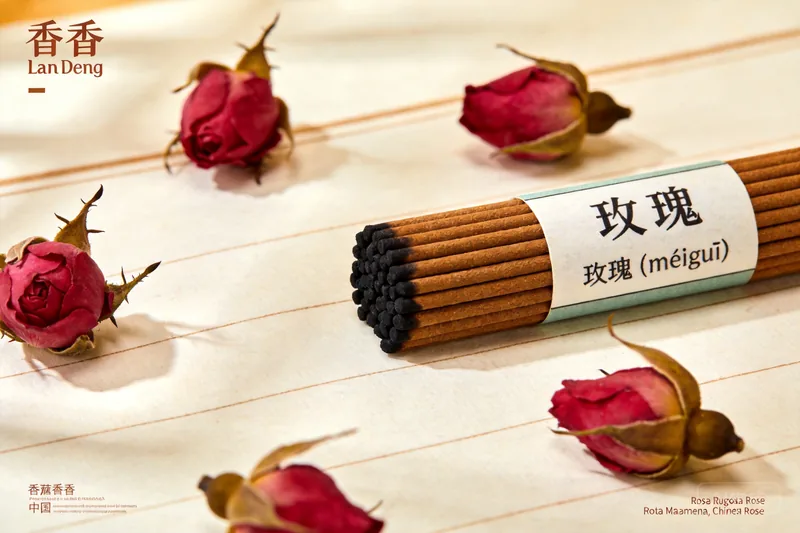
Key facts
| Chinese | 玫瑰 (méiguī), 玫瑰花 (méiguīhuā) |
| Botanical source | Rosa rugosa (Chinese rose); also R. damascena (damask rose) |
| What it is | A dried flower bud |
| Aroma | Sweet, floral, romantic |
| Traditional role | Tea, perfume, incense |
Aroma profile
Rose has a sweet, floral, “romantic” aroma. In Chinese fragrance the Chinese rose (R. rugosa) is the traditional material; the damask rose (R. damascena) dominates Western rose perfume. The two have related but distinguishable scents.
The damask rose reads as the “classic rose” of Western perfume — rich, dewy, slightly spicy; the Chinese rose (R. rugosa) is a touch fresher and fruitier, closer to a garden rose than a heavy perfume rose. In incense, “rose” is almost always a floral accord (a reconstructed rose note) layered over a wood or resin base, because true rose absolute is costly and delicate.
A Chinese naming point (玫瑰 vs 月季 vs 蔷薇)
Chinese distinguishes several “rose” plants that English loosely calls “rose”:
- 玫瑰 (Rosa rugosa) — the “Chinese rose” of tea and materia medica.
- 月季 (Rosa chinensis) — the repeat-blooming China rose, the garden/ornamental rose.
- 蔷薇 (Rosa multiflora and climbing roses) — the wild/climbing roses.
They are all Rosa species, but in Chinese they are distinct words. When a Chinese ingredient list says 玫瑰, it means R. rugosa — the tea and fragrance rose — not the garden 月季.
In Chinese tradition
- Tea: rose buds (玫瑰花) are brewed as a floral tea.
- Fragrance / perfume: rose is a classic floral note.
- Traditional materia medica: in traditional Chinese medicine, rose is described for “regulating qi” (理气) — smoothing emotional “stuckness.” This is traditional language, not modern clinical evidence.
In incense
Rose appears in incense as a floral note, almost always as an accord over a wood or resin base, because true rose absolute is costly. It is also used to make rose water (玫瑰花水), a classic fragrance and culinary ingredient in Chinese and Middle Eastern traditions.
Traditional use vs modern evidence
Traditional descriptions of rose (“circulating qi,” calming) are traditional materia-medica language, not established clinical fact. We describe rose’s aromatic and cultural use; we do not make medical claims.
Safety
Incense combustion produces smoke and particulate matter. Burn in a well-ventilated space; avoid inhaling concentrated smoke.
FAQ
What is the difference between Chinese rose and damask rose? Chinese rose (Rosa rugosa) is the traditional Chinese material; damask rose (Rosa damascena) is the classic Western perfume rose. They are different species with related but distinct scents. The damask rose reads as the rich, dewy, slightly spicy “classic rose” of Western perfume, while the Chinese rose is a touch fresher and fruitier, closer to a garden rose. In Chinese ingredient lists, 玫瑰 means R. rugosa.
Is rose a wood or a flower? A flower — the dried bud of Rosa species, used in tea, perfume, and incense. The fragrant material is the flower bud or petals, not any wood; in incense, “rose” is almost always a floral accord layered over a wood or resin base, because true rose absolute is costly. So rose is a light floral note that is usually delivered as a reconstructed accord in fragrance, not as raw flower material.
What does rose incense smell like? Sweet, floral, and “romantic” — a classic floral note, either the Chinese rose (Rosa rugosa) or the Western damask rose (R. damascena). In incense, rose is usually a reconstructed accord over a wood or resin base, so the exact character can range from a fresh, garden-like rose to a rich, dewy, slightly spicy perfume rose. The two species read slightly differently, with damask leaning richer and the Chinese rose fresher and fruitier.
Is rose used in Chinese incense? Yes, as a sweet floral note, usually blended rather than burned alone. It also appears in rose tea (玫瑰花茶) and traditional materia medica. Because true rose absolute is costly, rose in incense is typically a floral accord over a wood or resin base, where it adds a romantic, sweet lift to the blend. It is more common in floral-forward and modern blends than in the classical wood-and-resin canon.
What is the difference between 玫瑰, 月季, and 蔷薇? Three Rosa species in Chinese: 玫瑰 is R. rugosa (tea/fragrance rose), 月季 is R. chinensis (garden rose), and 蔷薇 covers climbing roses. They are distinct words and plants. In an ingredient list, 玫瑰 means R. rugosa — the tea and fragrance rose — not the ornamental garden 月季. English loosely calls all of them “rose,” but the Chinese terms separate the fragrant tea rose from the ornamental and climbing types.
What part of the rose is used? The flower bud — dried rose buds (玫瑰花) are used for tea and materia medica, while the petals are distilled for rose water and rose oil. The buds are picked and dried whole; the petals are processed by steam distillation or solvent extraction to yield rose oil and absolute for perfumery. So the bud is the tea ingredient and the petal is the perfumery material, two different parts with two different uses.
See also: jasmine and osmanthus, its fellow florals, plus the full scent guide.
Evidence & Sources
Botanical identity
Source: Rosa in Flora of China · Rosa on GBIF. Evidence type: Established.
Traditional Chinese use
Source: this page records rose (玫瑰) described for “regulating qi” (理气) in traditional Chinese medicine. Evidence type: Historically documented — traditional materia-medica language, not modern clinical evidence.
Authenticity / adulteration
Source: the 玫瑰 (Rosa rugosa) / 月季 (Rosa chinensis) / 蔷薇 naming distinction, and “rose” usually being a floral accord in incense. Evidence type: Practical screening.
Safety
Source: incense combustion produces smoke and particulate matter; burn in a well-ventilated space. Evidence type: Established.
Evidence status
| Layer | Status |
|---|---|
| Botanical identity | Established |
| Traditional use | Historically documented |
| Authenticity test | Practical screening |
| Health claims | Not established |
Sources
Sources: botanical references on Rosa (R. rugosa vs R. damascena) and TCM descriptions of 玫瑰花. Medicinal claims are treated as traditional, not clinical. This is editorial knowledge content, not medical advice.