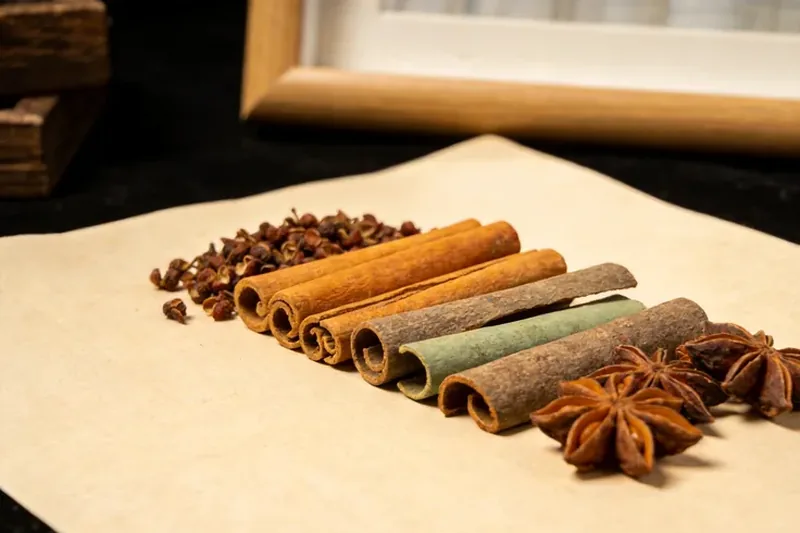
Direct answer: Anise (茴芹, huíqín) is the seed-fruit of Pimpinella anisum, a herbaceous plant of the carrot family (Apiaceae) whose small dried fruits carry the sweet, licorice-like anethole note. It is a Mediterranean-West Asian spice, distinct from fennel (小茴香) and star anise (八角/大茴香), and its Chinese name is a modern botanical term rather than a classical incense ingredient.
Key facts
| Chinese | 茴芹 (huíqín) — “anise”; cf. 洋茴香 |
| Botanical source | Pimpinella anisum (family Apiaceae) — the dried fruit |
| What it is | A dried aromatic seed-fruit, a spice |
| Aroma | Sweet, licorice, warm, spicy |
| Traditional role | Western culinary spice; anethole source |
Aroma profile
Anise is sweet and licorice-like, warm and spicy, driven almost entirely by the aromatic anethole it shares with fennel and star anise. It is the purest, most concentrated “sweet-licorice” note of the three — cleaner and sweeter than fennel’s greener herbaceous cast, and single-fruited rather than the star-shaped 八角. In aromatics it reads as a warm, candied sweetness, a classic note in Western liqueurs, pastries, and incense-adjacent fragrance.
Anise, fennel, and star anise (read this)
Three unrelated plants converge on the same molecule, anethole, and their Chinese names overlap confusingly around 茴:
- 茴芹 (anise) — Pimpinella anisum (Apiaceae), the small Mediterranean seed-fruit. This entry. Chinese 茴芹/洋茴香 is a modern botanical term.
- 小茴香 (fennel) — Foeniculum vulgare (Apiaceae), a different carrot-family plant, the 茴香 of classical Chinese cooking and 合香 formulas. Its own entry.
- 八角 / 大茴香 (star anise) — Illicium verum (Schisandraceae), the star-shaped fruit of an evergreen tree. Its own entry.
This page describes 茴芹 = anise, Pimpinella anisum. When a classical Chinese text or formula says 茴香, it means fennel (or star anise), not this Western anise; the anethole sweetness is the shared thread.
Botanical source and origin
Pimpinella anisum is an annual herb of the carrot family, native to the eastern Mediterranean and western Asia and cultivated since antiquity across the Mediterranean, the Middle East, and India. The part used is the small, ridged, seed-like fruit, whose anethole content gives the characteristic sweet licorice scent. Flora of China records the species (as a cultivated introduction). It is a Western spice that entered Chinese usage as 茴芹/洋茴香, not a classical 香乘 incense ingredient.
In Chinese and Western tradition
- Western spice: anise is a classical Mediterranean and Middle Eastern flavoring, used in liqueurs (anisette, ouzo, raki), pastries, and confectionery.
- Anethole source: anise shares its anethole sweetness with fennel and star anise — the shared aromatic that explains the overlapping 茴 names.
- Not a classical Chinese incense material: 茴芹 is a modern Chinese botanical term; the classical 茴香 of the 本草 and 香乘 tradition is fennel (小茴香), a different plant.
Traditional use vs modern evidence
The Western culinary and flavoring use is unambiguous and well documented. We make no medical claims. The documented, non-medical facts are botanical identity, the Apiaceae placement, and the anethole sweet-licorice character.
Quality and sourcing notes
Practical points for buyers:
- 茴芹 is anise (Pimpinella anisum); expect a sweet, licorice, warm, spicy scent, the purest anethole note of the 茴 group.
- Distinguish it from fennel (小茴香, Foeniculum vulgare) and star anise (八角, Illicium verum) — three unrelated plants sharing a name element and an anethole sweetness.
- It is a Western spice, not a classical Chinese incense ingredient; in incense it contributes a warm sweet-spice supporting note.
Safety
Incense combustion produces smoke and particulate matter. Burn in a well-ventilated space, avoid inhaling concentrated smoke, and keep away from children and pets. This is editorial knowledge content, not medical advice.
FAQ
What is 茴芹 (anise)? Anise or aniseed, Pimpinella anisum, an annual herb of the carrot family (Apiaceae) native to the eastern Mediterranean and western Asia. Its small dried fruits carry the sweet, licorice-like anethole note, and it is a classical Western flavoring used in liqueurs, pastries, and confectionery.
Is anise the same as fennel? No. Anise (茴芹, Pimpinella anisum) and fennel (小茴香, Foeniculum vulgare) are different carrot-family plants. Both carry the anethole sweetness and share the 茴 name element, but anise is the Mediterranean aniseed with the purest licorice note, while fennel is the classical Chinese 茴香. Classical texts saying 茴香 usually mean fennel, not this anise.
Is anise the same as star anise? No. Anise (茴芹, Pimpinella anisum) is a small seed-fruit of the carrot family, while star anise (八角/大茴香, Illicium verum) is the star-shaped fruit of an unrelated evergreen tree. Both carry anethole, which is why they taste and smell alike and share the 茴 name.
What does anise smell like? Sweet and licorice-like, warm and spicy, driven almost entirely by anethole. It is the purest, most concentrated sweet-licorice note of the 茴 group — cleaner and sweeter than fennel’s greener cast, and single-fruited rather than the star-shaped 八角.
Is anise a classical Chinese incense ingredient? Not as 茴芹. The Chinese name 茴芹/洋茴香 is a modern botanical term for a Western spice; the classical 茴香 of the 本草 and 香乘 tradition is fennel (小茴香), a different plant. Anise contributes a warm sweet-spice note in modern aromatics but has no classical 香乘 incense role.
Why do anise, fennel, and star anise all taste like licorice? Because they all contain anethole, the aromatic compound responsible for the sweet licorice scent and flavor. The three are unrelated plants — carrot family, carrot family, and Schisandraceae respectively — but converge on the same aromatic chemistry, which is why their Chinese names overlap around 茴.
See also: fennel, star-anise, and the full scent guide.
Evidence & Sources
Botanical identity
Source: Pimpinella anisum in Flora of China · Pimpinella anisum on GBIF. Evidence type: Established.
Traditional Chinese use
Source: anise as a Western culinary spice (anethole source); 茴芹 is a modern Chinese botanical term, distinct from the classical 茴香 (fennel, 小茴香). Evidence type: Historically documented — Western culinary use; no classical Chinese incense role.
Authenticity / disambiguation
Source: 茴芹 (anise, Pimpinella anisum) vs 小茴香 (fennel, Foeniculum vulgare) vs 八角 (star anise, Illicium verum) — shared anethole, shared 茴 name. Evidence type: Practical screening.
Safety
Source: incense combustion produces smoke and particulate matter; burn in a well-ventilated space. Evidence type: Established.
Evidence status
| Layer | Status |
|---|---|
| Botanical identity | Established |
| Traditional use | Historically documented (Western culinary) |
| Authenticity test | Practical screening |
| Health claims | Not established |
Sources
Sources: botanical references on Pimpinella anisum and the anise-vs-fennel-vs-star-anise distinction. Anise is documented as a Western culinary spice; no medical claims are made. This is editorial knowledge content, not medical advice.