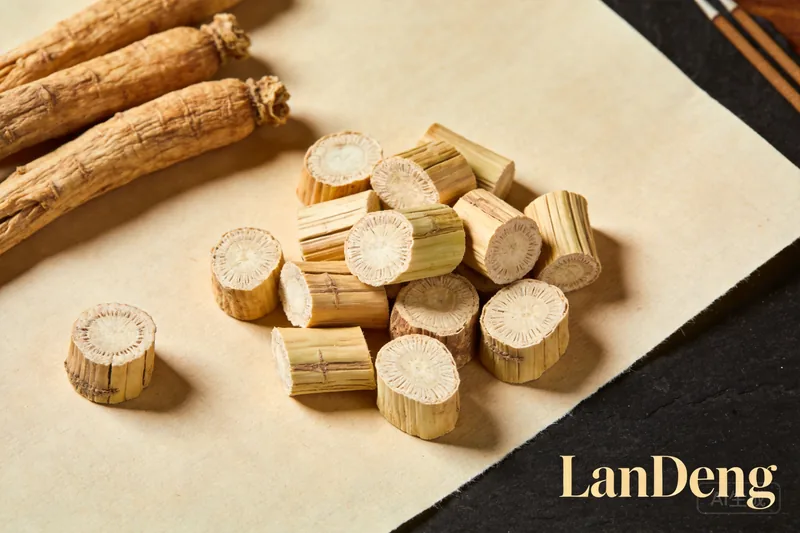
Definition: Calamus — chāngpú (菖蒲) in Chinese — is the aromatic rhizome of Acorus calamus (sweet flag), with a warm, spicy, slightly sweet, earthy scent. It is a traditional aromatic herb, but it carries an important safety caveat: the essential oil of many calamus varieties contains β-asarone, which is restricted in food use in several jurisdictions.
Key facts
| Chinese | 菖蒲 (chāngpú) |
| Botanical source | Acorus calamus (Acoraceae) — the rhizome |
| What it is | A dried aromatic rhizome (underground stem) |
| Aroma | Herbal, spicy, sweet, earthy |
| Traditional role | Incense, traditional herb, insect-repellent folklore |
Aroma profile
Calamus has a warm, spicy, slightly sweet, earthy aroma with a subtle bittersweet undertone. It is a “rooty” herbal note — closer to a spice than a flower — and it is usually a supporting character in blends rather than a solo scent.
The safety caveat (read this)
This is the one ingredient where the honest guidance goes beyond “ventilate”:
- β-asarone — calamus essential oil can contain high levels of β-asarone, which is carcinogenic in rodent studies.
- Food restrictions — the US FDA banned calamus in food in 1968; the European Commission set strict limits on β-asarone in foods and beverages.
- Variety matters — diploid Acorus calamus varieties are reported to contain little or no β-asarone, while other varieties (notably tetraploid) are high in it.
The key point: this restriction is about ingestion (food and internal use), not about the well-understood smoke exposure that applies to all incense. We make no claim that burning calamus incense is harmless, and no medical claims of any kind.
In Chinese tradition
- Incense (香): calamus is one of the classical aromatic roots of Chinese 合香, adding a spicy-herbal body.
- Seasonal use: 菖蒲 is traditionally hung or used around the Dragon Boat Festival (端午节), often alongside mugwort (艾草).
- Traditional herb: calamus has a long history in Asian and Ayurvedic traditions.
Traditional use vs modern evidence
Calamus appears in traditional medical systems across Asia, but its uses are traditional, not established clinical fact. The one well-documented point is the β-asarone safety concern, which is a matter of toxicology, not a health benefit. We make no medical claims.
Safety
Like all burning plant material, calamus smoke contains particulate matter — burn in a well-ventilated space and avoid inhaling concentrated smoke. Beyond that, note the β-asarone ingestion concern above. This is editorial knowledge content, not medical advice.
FAQ
Is calamus safe? The answer depends on how it is used. For ingestion, calamus is restricted in several jurisdictions because its essential oil can contain β-asarone, which is carcinogenic in rodent studies — the US FDA banned calamus in food in 1968, and the European Commission set limits on β-asarone. For incense, the relevant caution is the same as for any burning plant material: the smoke contains particulate matter, so burn in a well-ventilated space and avoid inhaling concentrated smoke. We make no claim that calamus incense is safe or unsafe beyond this.
What is the difference between calamus and sweet flag? There is no difference — they are the same plant. Acorus calamus is commonly called “sweet flag” in English, and calamus (菖蒲, chāngpú) is the Chinese name. The aromatic part is the rhizome, the underground stem, which has a warm, spicy, slightly sweet, earthy scent. The name varies by language and tradition, but the plant is the same, and the rhizome is the part used in incense and traditional practice.
What does calamus smell like? Calamus has a warm, spicy, slightly sweet, earthy aroma with a subtle bittersweet undertone. It is a “rooty” herbal note, closer to a spice than to a flower, and it usually acts as a supporting character in blends rather than a solo scent. The rhizome’s dry, earthy warmth adds body to Chinese 合香 formulas, complementing other aromatic roots and herbs. Because the scent is not sweet or floral, calamus reads as a grounding, herbal element rather than a bright top note.
Is calamus the same as orris root? No. Calamus is the rhizome of Acorus calamus, in the family Acoraceae, while orris root is the rhizome of the iris (Iris species, family Iridaceae). They are unrelated plants with different aromas and uses. Orris root has a sweet, powdery, violet-like scent prized in perfumery, whereas calamus is spicy, earthy, and herbal. The two are sometimes confused because both are aromatic rhizomes, but botanically and olfactorily they are distinct.
Why is calamus restricted in food? Calamus is restricted in food because its essential oil can contain β-asarone, a compound that is carcinogenic in rodent studies. The US FDA banned calamus in food in 1968, and the European Commission established strict limits on β-asarone in foods and beverages. The level of β-asarone varies by variety: diploid Acorus calamus is reported to contain little or none, while other varieties, notably tetraploid, are high in it. This restriction concerns ingestion and internal use, not the smoke exposure that applies to all incense.
See also: angelica, mugwort, and the full scent guide.
Evidence & Sources
Botanical identity
Source: Acorus in Flora of China · Acorus calamus on GBIF. Evidence type: Established.
Traditional Chinese use
Source: this page records calamus (菖蒲) as a classical aromatic root of 合香 and a Dragon Boat Festival (端午节) herb. Evidence type: Historically documented — traditional materia-medica language, not modern clinical evidence.
Safety
Source: like all burning plant material, calamus smoke contains particulate matter; its essential oil can contain β-asarone (FDA 1968 food ban; European Commission limits) — an ingestion concern. Evidence type: Established.
Evidence status
| Layer | Status |
|---|---|
| Botanical identity | Established |
| Traditional use | Historically documented |
| Health claims | Not established |
Sources
Sources: botanical and toxicological references on Acorus calamus and β-asarone (FDA 1968 ban; European Commission limits; diploid-vs-tetraploid variety distinction). Medicinal uses are treated as traditional, not established clinical fact. This is editorial knowledge content, not medical advice.