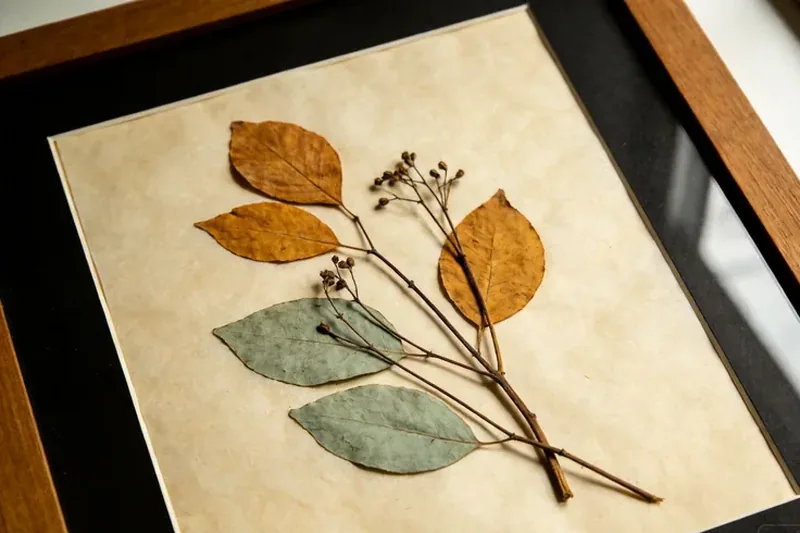
Direct answer: Elsholtzia (香薷, xiāngrú) is a leafy aromatic herb of the mint family (Lamiaceae), chiefly Elsholtzia ciliata. It is a classical Chinese aromatic-medicinal herb, recorded in the Bencao Gangmu under its aromatic names 香柔 and 香茸, and listed among the aromatics of the Ming Xiangcheng (香乘). Its character is a fresh, minty-spicy green note that sits between mint and perilla.
Key facts
| Chinese | 香薷 (xiāngrú); also 香柔, 香茸, 蜜蜂草 |
| Botanical source | Elsholtzia ciliata (family Lamiaceae) — the aerial herb |
| What it is | A leafy aromatic herb, not a wood or resin |
| Aroma | Minty, herbal, spicy, slightly sweet |
| Traditional role | Aromatic herb; materia medica; 香乘 aromatic |
Aroma profile
Direct answer: Elsholtzia is minty and herbal, with a spicy, faintly sweet, camphor-adjacent lift — a fresh green note close to mint and perilla but with its own softer, warmer cast. In incense it reads as a clean green aromatic that freshens a blend rather than leading it.
香薷 is minty and herbal, with a spicy, faintly sweet, camphor-adjacent lift — a fresh green note close to mint and perilla but with its own softer, warmer cast. It is not as sharply cooling as mint, nor as anise-leaning as perilla. In incense it reads as a clean green aromatic that freshens a blend, a bright herbal top or mid note in the mint-family register. Because the note is volatile, its contribution depends on when it is introduced and how much heat it meets — a point developed in the buyer notes below.
Botanical identity
Direct answer: Elsholtzia ciliata is an annual mint-family herb, and Flora of China describes an erect plant 30–50 cm tall whose purplish flowers open from July to October. The genus Elsholtzia groups several East Asian aromatic herbs, of which E. ciliata is the most widely encountered; related species such as E. splendens are also gathered.
Flora of China describes Elsholtzia ciliata precisely: erect herbs 30–50 cm tall, with glabrous or pilose stems that turn purple-brown with age; leaf blades ovate to elliptic-lanceolate, 3–9 × 1–4 cm, with a serrate margin and an acuminate apex; purplish corollas about 4.5 mm long in dense spikes 2–7 cm; and yellow-brown nutlets. It flowers July–October and fruits October–January. The species is the type of a genus that carries several East Asian aromatic herbs, of which E. ciliata and the related E. splendens are both gathered for their volatile oils. See Elsholtzia ciliata in Flora of China and Elsholtzia ciliata on GBIF.
Chinese name and terminology
Direct answer: The name 香薷 is itself an aroma statement. The Bencao Gangmu explains that 薷 is originally 葇, “its smell is fragrant and its leaves soft, hence the name” (其氣香,其葉柔,故以名之), and records the aliases 香柔, 香茸, and 蜜蜂草. Li Shizhen’s decision to move the herb into the 芳草 section is itself a classification judgment.
The name is an aroma: the Bencao Gangmu (本草纲目), in its fragrant-herb section (草之三), records 香薷 with the alternative names 香柔, 香茸, and 蜜蜂草, and explains:
“時珍曰:薷,本作葇。……其氣香,其葉柔,故以名之。” — the character 薷 is originally 葇; its smell is fragrant and its leaves soft, hence the name.
The herb was moved by Li Shizhen from the vegetable section into the fragrant-herb (芳草) section, a correction that itself signals its standing as an aromatic rather than a mere potherb. The Ming-dynasty Xiangcheng (香乘) also lists 香薷 among aromatics, confirming its place in the classical Chinese fragrance vocabulary.
The Lamiaceae green-aromatic triangle
Direct answer: 香薷 (elsholtzia), 藿香 (agastache), and 紫苏 (perilla) are three mint-family herbs whose green notes overlap closely enough that a buyer must distinguish them by species. Elsholtzia is minty-spicy and slightly sweet, agastache is minty-anise, and perilla is shiso-like and anise-leaning — three genera, one aromatic family.
The mint family (Lamiaceae) contributes a cluster of green aromatics to Chinese incense, and three of them — 香薷, 藿香, and 紫苏 — sit close enough in profile that their names are worth pinning to species:
- 香薷 (elsholtzia) — Elsholtzia ciliata; minty-spicy, slightly sweet, camphor-adjacent. This entry.
- 藿香 (agastache) — Agastache rugosa; minty-anise, with its own same-name tangles (see agastache-rugosa).
- 紫苏 (perilla) — Perilla frutescens; anise-leaning with a shiso character (see perilla).
The family relationship is the trap: three different genera share the “minty green herb” register, so a label that says only “aromatic herb” does not identify the material. This is a species question, not a stylistic detail.
Where does elsholtzia come from?
Direct answer: Elsholtzia ciliata is broadly distributed across East and Southeast Asia. Flora of China records it in every Chinese province except Qinghai and Xinjiang, from sea level to 3,400 m, on hills, waste ground, sunny terraces, riverbanks, and forest edges — and notes it has been introduced to Europe and North America.
The species has a wide native and adventive range. Flora of China records it in all provinces except Qinghai and Xinjiang, in habitats from hills, waste areas, sunny terraces, riverbanks, and forests at 0–3,400 m, with an accompanying range across Cambodia, India, Japan, Laos, Malaysia, Mongolia, Myanmar, Russia, Thailand, and Vietnam, and introductions into Europe and North America. That breadth matters for sourcing: it is a common, widely gathered herb rather than a scarce or regionally restricted one, which keeps it an accessible green aromatic rather than a premium rarity.
Why is it used in incense?
Direct answer: Elsholtzia is used as a fresh green aromatic — a minty-spicy top or mid note that brightens a 合香 blend. It is a supporting herb rather than a self-sufficient base: it lifts heavier woods and resins without leading the scent, and its classical standing is as an aromatic herb, not as a burned anchor.
香薷’s role is as a fresh green aromatic: a minty-spicy note that brightens a 合香 blend and lifts heavier woods and resins without leading the scent. Its classical standing — grouped among the 芳草 by the Bencao Gangmu and listed in the Xiangcheng — is as an aromatic herb, not as a burned base or fixative. In practical terms it is a supporting top or mid note whose value lies in freshness and lift, introduced for its green register rather than for sweetness or depth.
How is it processed?
Direct answer: Elsholtzia is used as the dried aerial herb — leaves and flowering tops — gathered and dried to preserve the volatile oils. Processing is a drying question rather than a resin-tapping or distillation one: the goal is to hold the fresh, minty-spicy note against the losses that come with heat and age.
As a leafy mint-family herb, 香薷 is handled by drying rather than tapping or distilling. The aerial herb — leaves and flowering tops — is gathered and dried to preserve the volatile oils that carry the minty-spicy note. The practical concern is volatility: the aromatic oils are heat- and age-sensitive, so drying temperature and storage condition affect how much of the fresh green character survives. This contrasts with resin materials (which are tapped and hardened) and with distilled oils (which concentrate a single fraction); the whole-herb form is the traditional material of use. The wider herb-handling logic sits within how incense is made.
What determines elsholtzia quality?
Direct answer: Quality turns on freshness and aroma intensity — a clean, well-dried herb that retains its minty-spicy, slightly sweet green scent. Faded, musty, or heat-damaged material has lost the volatile note that is the whole point of the ingredient, so aroma on gentle warming is the decisive check.
The quality factors, in rough order:
- Aroma intensity — the minty-spicy, slightly sweet green note is the value; a clean, fresh scent beats a faded one.
- Condition — clean, well-dried herb, free of mold, excess stem, and foreign matter.
- Freshness — volatile oils fade with age and poor storage, so an older or badly stored batch reads flat.
- Species clarity — Elsholtzia ciliata (and relatives) rather than an unspecified “mint-family herb,” so the buyer knows what green note is actually in hand.
There is no standardized commercial grading ladder for 香薷; the practical signal is the aroma on gentle warming, which should be minty-spicy and slightly sweet, not musty or faded.
Common forms
Direct answer: Elsholtzia is sold as the dried whole herb — leaves and flowering tops — either loose or cut. The whole-herb form is the traditional material; there is no meaningful wood, resin, or distilled-oil form for this ingredient in classical practice.
| Form | Typical use |
|---|---|
| Dried whole herb | 合香 blending; scenting; materia medica |
| Cut / powdered herb | Blended incense where the green note is added as a powder |
The distinction is one of physical preparation (whole vs cut vs ground), not of material grade — the same herb in different particle states.
In Chinese tradition
- Aromatic herb (Traditional Use): 香薷 is a classical aromatic herb, grouped by the Bencao Gangmu among the 芳草 (fragrant herbs) and used for its fresh, minty-spicy green scent.
- 香乘 listing (Historical Record): the Ming-dynasty Xiangcheng (香乘) lists 香薷 among aromatics, placing it in the classical fragrance vocabulary; the Bencao Gangmu 草之三 records the name 香薷 with the aliases 香柔, 香茸, and 蜜蜂草 and explains the name (“其氣香,其葉柔,故以名之”).
- Materia medica (Traditional Use): 香薷 appears in traditional Chinese medicine. This is traditional materia-medica language, not modern clinical evidence.
Traditional use vs modern evidence
Direct answer: The aromatic classification and the classical record are documented. Medicinal uses are traditional, not established clinical fact, and this page makes no medical claims. The well-documented facts are botanical identity, the Lamiaceae placement, the Bencao Gangmu name record, and the Xiangcheng aromatic listing.
- Traditional Use — 香薷 as a fragrant herb (芳草) and its traditional materia-medica applications.
- Historical Record — the Bencao Gangmu (本草纲目) 草之三 name-and-classification record, and the Ming Xiangcheng (香乘) listing of 香薷 among aromatics.
- Scientific Evidence — the plant’s botanical identity and the volatile-oil chemistry that underlies the aroma are documented; we present no clinical or medical efficacy claims.
The aromatic classification and culinary use are documented. Medicinal uses are traditional, not established clinical fact, and we make no medical claims.
What buyers should look for
Direct answer: Buyers should confirm species — Elsholtzia ciliata and relatives, not an unspecified mint-family herb — and then judge freshness by aroma: the herb should smell minty-spicy and slightly sweet, not musty or faded. Distinguish it from agastache and perilla, which share the green register but differ in species and note.
For an incense maker or sourcing buyer:
- Species — Elsholtzia ciliata (and relatives); distinguish from agastache (藿香) and perilla (紫苏), which overlap in the green register.
- Aroma — minty-spicy and slightly sweet on gentle warming; a musty or faded note signals lost volatiles.
- Condition — clean, well-dried aerial herb with minimal stem and foreign matter.
- Form — whole herb vs cut vs powder, matched to how the blend introduces the note.
Our Industry View
Direct answer: Elsholtzia is a fresh, volatile green note whose commercial value is almost entirely about freshness and species clarity. Because its aroma is heat- and age-sensitive, a buyer should treat “香薷” as a freshness specification, not a static grade — and confirm which mint-family species is actually in hand.
From a manufacturing perspective, 香薷 illustrates a general point about leafy green aromatics: the value is in a volatile note that the supply chain is working against. Two points follow:
- Freshness is the specification. Unlike a resin or wood, whose aroma is relatively stable, a leafy herb loses its minty-spicy top note with age, heat, and poor storage. A buyer who specifies only “香薷” without checking aroma is buying a name, not a note. The practical test is smell on gentle warming — a flat or musty batch is a spent batch regardless of what the label says.
- Species clarity beats family proximity. Three mint-family herbs (elsholtzia, agastache, perilla) share the green register, but they are different genera with different notes. In a repeatable blend, “a minty green herb” is not a specification; Elsholtzia ciliata is.
In our view, 香薷 is a useful supporting green aromatic — buy it by species name, judge it by fresh aroma, and treat it as a top or mid note that brightens a blend rather than a material that anchors one.
Summary
Elsholtzia (香薷) is the dried aerial herb of Elsholtzia ciliata, an annual mint-family (Lamiaceae) herb of East and Southeast Asia, whose minty-spicy, slightly sweet green note made it a classical 芳草 aromatic — recorded in the Bencao Gangmu (which explains the name as “fragrant smell, soft leaves”) and listed in the Ming Xiangcheng (香乘). It is a supporting top or mid note whose value is freshness and species clarity, distinct from the related agastache and perilla. Its medicinal uses are traditional language, not clinical evidence.
FAQ
What is 香薷 (elsholtzia)? A leafy aromatic herb of the mint family (Lamiaceae), chiefly Elsholtzia ciliata, native to East and Southeast Asia. Flora of China describes an erect herb 30–50 cm tall with purplish flowers from July to October. It is a classical Chinese aromatic-medicinal herb, recorded in the Bencao Gangmu as 香薷 (also 香柔, 香茸), and listed among aromatics in the Ming Xiangcheng (香乘).
What does the name 香薷 mean? It means “fragrant-soft.” The Bencao Gangmu records that the character 薷 is originally 葇, and that “its smell is fragrant and its leaves soft, hence the name” (其氣香,其葉柔,故以名之). Li Shizhen moved the herb into the fragrant-herb (芳草) section, a classification that signals its standing as an aromatic rather than a mere vegetable.
What does elsholtzia smell like? Minty and herbal, with a spicy, faintly sweet, camphor-adjacent lift. It is a fresh green note close to mint and perilla but softer and warmer, and in incense it reads as a clean green aromatic that freshens a blend rather than leading it.
Is 香薷 used in classical Chinese incense? It appears among the aromatics listed in the Ming-dynasty Xiangcheng (香乘), and the Bencao Gangmu groups it with the 芳草 (fragrant herbs). Its documented role is as an aromatic herb — a fresh green note in blends — rather than as a self-sufficient burned incense material or fixative.
Is elsholtzia the same as mint or perilla? No — they are related Lamiaceae herbs with distinct profiles. Elsholtzia (香薷) is minty-spicy and slightly sweet; mint (薄荷, Mentha) is sharply cooling; perilla (紫苏, Perilla frutescens) is more anise-like with a shiso character. They are different genera in the same family, and agastache (藿香) is a fourth distinct green aromatic in the same register.
What part of the plant is used? The aerial herb — leaves and flowering tops — which carry the volatile oils responsible for the fresh, minty-spicy scent. The whole dried herb is the material of use, and freshness is the key quality factor because the volatile note fades with age and heat.
How should I judge 香薷 quality? By fresh aroma on gentle warming: it should smell minty-spicy and slightly sweet, not musty or faded. Confirm the species (Elsholtzia ciliata and relatives) and the condition (clean, well-dried, minimal stem and foreign matter). There is no standardized grading ladder, so aroma is the practical signal.
See also: agastache-rugosa, perilla, mint, and the full scent guide.
Evidence & Sources
Botanical identity
Source: Elsholtzia ciliata in Flora of China · Elsholtzia ciliata on GBIF. Evidence type: Established.
Traditional Chinese use
Source: the Bencao Gangmu (本草纲目), 草之三, records 香薷 with the names 香柔, 香茸, 蜜蜂草, explaining “其氣香,其葉柔,故以名之”; the Ming-dynasty Xiangcheng (香乘) lists 香薷 among aromatics. Evidence type: Historically documented — aromatic herb; medicinal uses are traditional, not modern clinical evidence.
Authenticity / disambiguation
Source: 香薷 (Elsholtzia ciliata) vs agastache (藿香) vs perilla (紫苏) — mint-family green aromatics. Evidence type: Practical screening.
Safety
Source: incense combustion produces smoke and particulate matter; burn in a well-ventilated space. Evidence type: Established.
Evidence status
| Layer | Status |
|---|---|
| Botanical identity | Established |
| Traditional use | Historically documented (aromatic) |
| Authenticity test | Practical screening |
| Health claims | Not established |
Sources
- Elsholtzia ciliata in Flora of China
- Elsholtzia ciliata on GBIF
- 本草纲目 草之三 on Wikisource
- 香乘 on Wikisource
Sources: botanical references on Elsholtzia ciliata, the Bencao Gangmu (本草纲目) 草之三 record of 香薷, and the Ming-dynasty Xiangcheng (香乘) listing of 香薷 among aromatics. 香薷’s aromatic use is documented; medicinal uses are treated as traditional, not established clinical fact. This is editorial knowledge content, not medical advice.