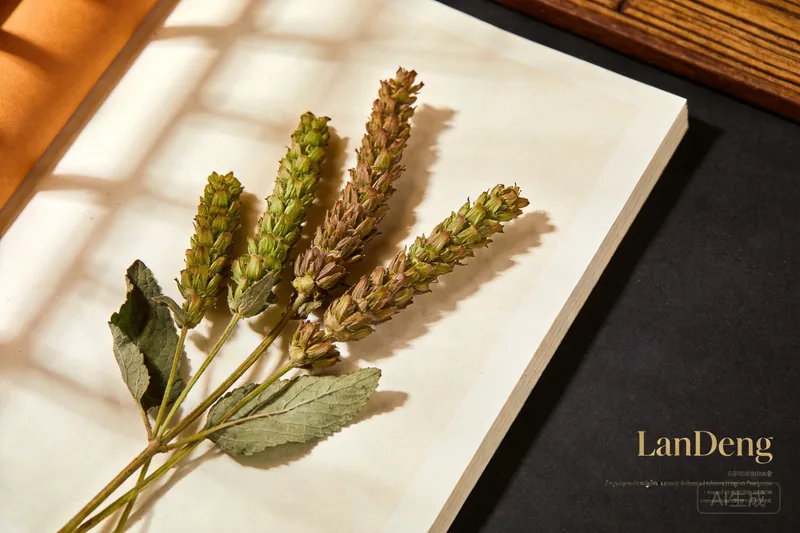
Technical answer: Agastache — huòxiāng (藿香) in Chinese — is a fragrant herb, Agastache rugosa (Chinese giant hyssop), in the mint family. It is a classical Chinese incense and materia-medica herb with a minty, anise-like aroma. It is frequently confused with patchouli, a different plant — the two share the “藿香” name in Chinese, which is a standing source of error.
Key facts
| Chinese | 藿香 (huòxiāng), also 土藿香 |
| Botanical source | Agastache rugosa (family Lamiaceae) — the dried herb |
| What it is | A dried aromatic herb, not a wood or resin |
| Aroma | Minty, herbal, slightly sweet, anise-like |
| Traditional role | 合香 (blended incense), scenting clothes, materia medica |
Aroma profile
Agastache has a minty, herbal, slightly sweet aroma with an anise-like undertone — a fresh, green-herbal note rather than a deep or smoky one. It is a bright blender, lifting a formula with a clean minty lift, and it is also valued for scenting fabric and clothing.
The 藿香 / 广藿香 confusion
This is the key disambiguation for this material. Two different plants share the name “藿香” in Chinese:
- 藿香 (this page) — Agastache rugosa, the native Chinese giant hyssop, a Lamiaceae herb with a minty-anise aroma.
- 广藿香 — Pogostemon cablin, patchouli, a different Lamiaceae plant with an earthy, woody, balsamic scent (treated on this site as patchouli).
The classical name 藿香 primarily meant Agastache rugosa, but because the two plants were traded together and share the name, they have been conflated for centuries. A label that says only “藿香” is underspecified — 藿香 and 广藿香 are different plants with different scents.
In Chinese tradition
- 合香 (blended incense): 藿香 is a classical fresh-herb ingredient in blended incense, contributing a minty, green lift.
- Scenting clothes: classical sources describe putting 藿香 in clothing to scent it — 可着衣服中.
- Buddhist naming: 藿香 carries several Buddhist-sutra names — 多摩羅跋香 (tāmalapatra), 兜娄婆香, 钵怛罗香, 迦筭香 — a sign of its importance in Buddhist incense practice.
- Materia medica: 藿香 is a major traditional-medicine herb, classically described for “transforming dampness” (化湿) and related uses. This is traditional materia-medica language, not modern clinical evidence.
Traditional use vs modern evidence
The aromatic and cultural roles (incense, scenting, Buddhist naming) are well documented. The medicinal uses are traditional, not established clinical fact, and we make no medical claims. The documented, non-medical facts are botanical identity and agastache’s long use as a fresh, minty incense herb.
Quality and sourcing notes
Practical points for buyers:
- 藿香 (Agastache rugosa) and 广藿香 (Pogostemon cablin, patchouli) are different plants; check which a label specifies.
- 藿香 is a fresh, minty-anise herb; patchouli is earthy, woody, and balsamic. The scents are not interchangeable.
- The dried herb should smell clean and minty, without mustiness.
Safety
Incense combustion produces smoke and particulate matter. Burn in a well-ventilated space, avoid inhaling concentrated smoke, and keep away from children and pets. This is editorial knowledge content, not medical advice.
FAQ
Is 藿香 the same as patchouli? No. 藿香 (Agastache rugosa) is the native Chinese giant hyssop with a minty, anise-like aroma; patchouli is Pogostemon cablin (广藿香), a different mint-family plant with an earthy, woody, balsamic scent. They share the “藿香” name in Chinese, which is why they have been conflated for centuries, but they are different plants with different scents — see our patchouli page.
What does agastache smell like? Agastache (藿香) has a minty, herbal, slightly sweet aroma with an anise-like undertone — a fresh, green-herbal note. It is a bright blender, lifting a formula with a clean minty lift, and it is also used to scent fabric. It is quite different from the earthy, woody scent of patchouli.
What is 土藿香? 土藿香 (“earth/native agastache”) is another name for Agastache rugosa, the native Chinese agastache, used to distinguish it from 广藿香 (Pogostemon cablin, patchouli). The “土” (native) prefix marks it as the local plant rather than the imported patchouli. The two are different species despite sharing the “藿香” name.
How is agastache used in incense? Agastache is a classical fresh-herb ingredient in 合香 (blended incense), contributing a minty, green lift. Classical sources also describe placing it in clothing to scent the fabric (可着衣服中). It carries several Buddhist-sutra names — 多摩羅跋香 (tāmalapatra) and others — reflecting its role in Buddhist incense practice.
Why does agastache have so many Buddhist names? Because it was a valued aromatic in Buddhist incense practice, and the sutras recorded it under several transliterated names — 多摩羅跋香 (tāmalapatra, from the Sanskrit for a fragrant leaf), 兜娄婆香, 钵怛罗香, and 迦筭香. The proliferation of names is a record of the herb’s importance across the incense traditions that entered China with Buddhism, not a sign of confusion about the plant itself.
See also: patchouli, mugwort, and the full scent guide.
Evidence & Sources
Botanical identity
Source: Agastache rugosa in Flora of China · Agastache rugosa on GBIF. Evidence type: Established.
Traditional Chinese use
Source: the Song-dynasty Xiangpu (香譜) records 藿香 under the Buddhist name 多摩羅跋香 (《釋氏會要》); the Ming Xiangcheng (香乘) records the sutra names (法华经 多摩罗跋香, 楞严经 兜娄婆香, etc.) and the clothing-scenting use (可着衣服中). Evidence type: Historically documented — traditional, not modern clinical evidence.
Authenticity / disambiguation
Source: the 藿香 (Agastache rugosa) vs 广藿香 (Pogostemon cablin, patchouli) distinction. Evidence type: Practical screening.
Safety
Source: incense combustion produces smoke and particulate matter; burn in a well-ventilated space. Evidence type: Established.
Evidence status
| Layer | Status |
|---|---|
| Botanical identity | Established |
| Traditional use | Historically documented |
| Authenticity test | Practical screening |
| Health claims | Not established |
Sources
Sources: botanical references on Agastache rugosa and the Song-dynasty Xiangpu (香譜) / Ming Xiangcheng (香乘) records of 藿香. The 藿香 / 广藿香 (patchouli) distinction is recorded as practical screening. Medicinal uses are treated as traditional, not established clinical fact. This is editorial knowledge content, not medical advice.