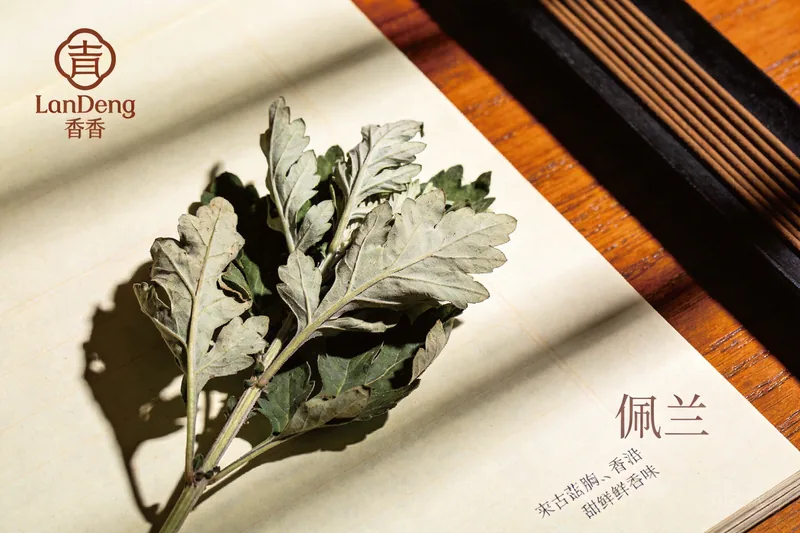
Technical answer: Eupatorium — pèilán (佩兰) in Chinese — is the aromatic aerial part of Eupatorium fortunei, a herbaceous plant of the daisy family (Asteraceae) native to East Asia. It is a classical Chinese “fragrant herb” (香草) whose name literally means “worn orchid” — 佩 (“to wear”) and 兰 (“orchid”) — because the fragrant herb was traditionally worn in sachets and used to scent clothing. It is a fresh, herbaceous, mildly sweet aromatic used in incense, sachets, and traditional practice.
Key facts
| Chinese | 佩兰 (pèilán), literally “worn orchid” |
| Botanical source | Eupatorium fortunei (family Asteraceae) — the aerial herb |
| What it is | A dried fragrant herb, not a wood or resin |
| Aroma | Herbal, aromatic, slightly sweet and fresh |
| Traditional role | Sachet and clothing scent (佩/香囊), materia medica |
Aroma profile
Eupatorium is fresh and herbaceous, with a gentle sweetness and a clean, slightly aromatic lift. It is a “green” note — closer to a scented-leaf character than to a flower or wood. In traditional use it scents sachets and clothes rather than being burned as a dominant incense note, and it reads as a light, fresh aromatic in blends.
Botanical source and origin
Eupatorium fortunei is a herbaceous perennial of the Asteraceae family, native to China, Japan, and Korea, where it grows in moist places. The part used is the above-ground herb — leaves and stems — harvested and dried. The name 佩兰 captures the plant’s cultural role: it was worn (佩) for its fragrance, in the same tradition as the “orchid” herbs of classical poetry.
A naming caution: 佩兰 (Eupatorium fortunei) is not an orchid, despite the 兰 (“orchid”) in its name. Chinese uses 兰 for many fragrant plants; 佩兰 is a daisy-family herb. It is also distinct from 泽兰 (Lycopus lucidus), a different aromatic herb with a similar-sounding name in traditional materia medica.
In Chinese tradition
- Scenting clothes and sachets: the name 佩兰 and the classical “fragrant herb” (香草) tradition point to wearing the herb in sachets and using it to scent garments — a documented, non-medical aromatic role.
- Fragrant-herb culture: eupatorium belongs to the classical roster of scented herbs (香草) celebrated in Chinese poetry and ritual, alongside plants like 兰 and 艾.
- Materia medica: 佩兰 is recorded in traditional Chinese medicine as an aromatic herb. This is traditional materia-medica language, not modern clinical evidence.
Traditional use vs modern evidence
The aromatic, sachet-and-clothing role is well documented. Medicinal uses are traditional, not established clinical fact, and we make no medical claims. The documented, non-medical facts are botanical identity and the plant’s long use as a fresh, herbaceous fragrance.
Quality and sourcing notes
Practical points for buyers:
- Dried eupatorium should be clean and green, with a fresh, herbaceous scent when rubbed.
- Distinguish 佩兰 (Eupatorium fortunei) from 泽兰 (Lycopus lucidus) — a different aromatic herb with a similar name.
- As an incense ingredient, eupatorium is a light, fresh green note, usually blended rather than burned alone.
Safety
Incense combustion produces smoke and particulate matter. Burn in a well-ventilated space, avoid inhaling concentrated smoke, and keep away from children and pets. This is editorial knowledge content, not medical advice.
FAQ
What is 佩兰 (pèilán)? A classical Chinese fragrant herb — the dried aerial part of Eupatorium fortunei, a daisy-family plant native to East Asia. The name literally means “worn orchid” (佩 “wear,” 兰 “orchid”), reflecting its traditional role: the fragrant herb was worn in sachets and used to scent clothing. It is a fresh, herbaceous, mildly sweet aromatic, not an orchid and not a wood or resin.
Is 佩兰 an orchid? No. Despite the 兰 (“orchid”) in its name, 佩兰 is Eupatorium fortunei, a herb of the Asteraceae (daisy) family. Chinese uses 兰 to name many fragrant plants beyond true orchids, and 佩兰 belongs to the classical “fragrant herb” (香草) tradition rather than to the orchid family. It is also distinct from 泽兰 (Lycopus lucidus), a different aromatic herb.
What does eupatorium smell like? Fresh and herbaceous, with a gentle sweetness and a clean, lightly aromatic lift — a “green” scent closer to a fragrant leaf than to a flower or wood. In traditional use it scents sachets and garments rather than burning as a dominant note, and in incense blends it reads as a light, fresh accent.
How was eupatorium traditionally used? Primarily as a fragrance — worn in sachets and used to scent clothing, which is exactly what the name 佩兰 (“worn orchid”) records. It is part of the classical roster of scented herbs celebrated in Chinese poetry and ritual. It also appears in traditional materia medica, but this page treats any medicinal use as traditional, not established clinical fact.
What part of the plant is used? The above-ground herb — the leaves and stems — harvested and dried. The aromatic character comes from the whole aerial herb rather than a root, wood, or seed. The dried material should be clean and green, with a fresh scent when rubbed, and is usually blended rather than burned alone.
See also: mugwort, agastache-rugosa, and the full scent guide.
Evidence & Sources
Botanical identity
Source: Eupatorium fortunei in Flora of China · Eupatorium fortunei on GBIF. Evidence type: Established.
Traditional Chinese use
Source: 佩兰 as a fragrant herb worn in sachets and used to scent clothing; the 香草 (“fragrant herb”) cultural tradition. Evidence type: Historically documented — aromatic and cultural use, not medical.
Authenticity / disambiguation
Source: 佩兰 (Eupatorium fortunei) vs 泽兰 (Lycopus lucidus) — distinct aromatic herbs with similar names. Evidence type: Practical screening.
Safety
Source: incense combustion produces smoke and particulate matter; burn in a well-ventilated space. Evidence type: Established.
Evidence status
| Layer | Status |
|---|---|
| Botanical identity | Established |
| Traditional use | Historically documented |
| Authenticity test | Practical screening |
| Health claims | Not established |
Sources
Sources: botanical references on Eupatorium fortunei and the 佩兰/泽兰 distinction. Eupatorium is recorded as a fragrant herb worn in sachets and used to scent clothing; medicinal uses are treated as traditional, not established clinical fact. This is editorial knowledge content, not medical advice.