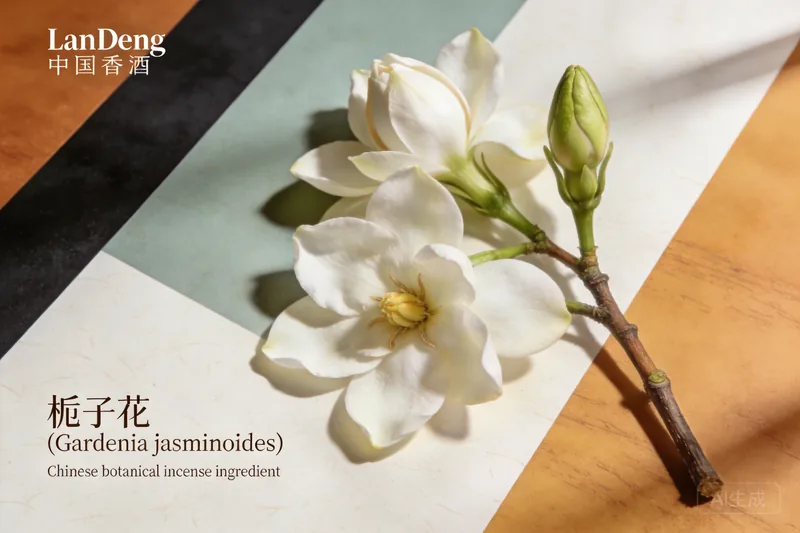
Technical answer: Gardenia — zhīzihuā (栀子花) in Chinese — is the fragrant white flower of Gardenia jasminoides, an evergreen shrub of the coffee family (Rubiaceae) native to East Asia. The flower is intensely sweet and creamy — one of the classic white-floral scents of Chinese fragrance — and it is used in floral incense, in scenting tea, and as a fragrance reference in Chinese culture. The same plant’s fruit (栀子, zhīzi) is a separate material used as a yellow dye and in materia medica.
Key facts
| Chinese | 栀子花 (zhīzihuā) flower; 栀子 (zhīzi) fruit |
| Botanical source | Gardenia jasminoides (family Rubiaceae) — the flower |
| What it is | A fragrant white flower, not a wood or resin |
| Aroma | Sweet, creamy, white-floral, slightly heady |
| Traditional role | Floral incense, tea scenting, fragrance reference |
Aroma profile
Gardenia is a rich, creamy, heady white-floral — sweet and almost tropical, in the same fragrant family as jasmine and tuberose but heavier and more indolic-creamy. It is an intensely floral note. The fresh flower is far more fragrant than the dried, so gardenia in incense is usually a delicate floral accent or a theme referenced in a named blend rather than a material burned for its own strong scent.
Botanical source and origin
Gardenia jasminoides is an evergreen shrub of the Rubiaceae (coffee) family, native to southern China, Taiwan, and Japan, and widely cultivated for its glossy leaves and fragrant white flowers. The plant yields two distinct materials:
- 栀子花 (zhīzihuā) — the flower, used for its fragrance in floral incense and tea scenting.
- 栀子 (zhīzi) — the fruit, a source of yellow dye and a materia-medica item.
A naming caution: 栀子花 (the flower) and 栀子 (the fruit) come from the same plant but are different materials with different uses. An incense or dye label saying 栀子 usually means the fruit; 栀子花 means the flower.
In Chinese tradition
- Floral incense: gardenia’s creamy white-floral scent is referenced in Chinese floral fragrance, where it sits alongside jasmine, osmanthus, and champaca.
- Tea scenting: gardenia flowers are used to scent tea, a traditional aromatic technique shared with jasmine and osmanthus.
- Dye: the fruit (栀子) is a classical yellow dye for textiles and food, a documented non-medical use.
- Materia medica: 栀子 (the fruit) is recorded in traditional Chinese medicine. This is traditional materia-medica language, not modern clinical evidence.
Traditional use vs modern evidence
The floral-fragrance and dye roles are well documented. Medicinal uses are traditional, not established clinical fact, and we make no medical claims. The documented, non-medical facts are botanical identity, the flower’s fragrance role, and the fruit’s dye role.
Quality and sourcing notes
Practical points for buyers:
- Gardenia’s fragrance is strongest fresh; the dried flower is subtle, used as a delicate floral accent.
- Distinguish 栀子花 (the flower, for fragrance) from 栀子 (the fruit, for dye and materia medica).
- In incense, gardenia is usually a floral accent or a named theme, not a dominant burned material.
Safety
Incense combustion produces smoke and particulate matter. Burn in a well-ventilated space, avoid inhaling concentrated smoke, and keep away from children and pets. This is editorial knowledge content, not medical advice.
FAQ
What is the difference between 栀子花 and 栀子? They come from the same plant, Gardenia jasminoides, but are different materials. 栀子花 (zhīzihuā) is the fragrant white flower, used for its scent in floral incense and tea scenting. 栀子 (zhīzi) is the fruit, used as a yellow dye and in traditional materia medica. A label saying 栀子 usually means the fruit; 栀子花 means the flower.
What does gardenia smell like? Rich, sweet, creamy, and heady — a white-floral in the family of jasmine and tuberose, but heavier and more indolic. It is an intensely floral note, strongest in the fresh flower. The dried flower is far subtler, which is why gardenia in incense is usually a delicate accent or a theme rather than a dominant burned material.
Is gardenia used in Chinese incense? Yes, as a floral note. Its creamy white-floral scent is referenced in Chinese floral fragrance alongside jasmine, osmanthus, and champaca, and the flowers are used in the traditional technique of scenting tea. Because the fresh flower is far more fragrant than the dried, gardenia in incense tends to be a delicate accent or a named theme rather than a heavy burned material.
What is gardenia fruit used for? As a yellow dye — 栀子 (zhīzi) is a classical dye for textiles and food — and as a materia-medica item. This dye role is a documented, non-medical use. Any medicinal use of the fruit is treated here as traditional, not established clinical fact.
What part of the plant is used for fragrance? The white flower. Gardenia’s fragrance is concentrated in the blossom, which is used fresh or dried for floral incense and tea scenting. The fruit is a separate material used for dye and traditional medicine. The two parts share the plant but serve different purposes.
See also: jasmine, osmanthus, and the full scent guide.
Evidence & Sources
Botanical identity
Source: Gardenia jasminoides in Flora of China · Gardenia jasminoides on GBIF. Evidence type: Established.
Traditional Chinese use
Source: gardenia flower as a white-floral fragrance and tea-scenting material; the fruit (栀子) as a yellow dye and materia-medica item. Evidence type: Historically documented — floral and dye use; medicinal uses are traditional, not modern clinical evidence.
Authenticity / disambiguation
Source: 栀子花 (flower) vs 栀子 (fruit) — different materials from the same plant. Evidence type: Practical screening.
Safety
Source: incense combustion produces smoke and particulate matter; burn in a well-ventilated space. Evidence type: Established.
Evidence status
| Layer | Status |
|---|---|
| Botanical identity | Established |
| Traditional use | Historically documented |
| Authenticity test | Practical screening |
| Health claims | Not established |
Sources
Sources: botanical references on Gardenia jasminoides and the 栀子花/栀子 (flower vs fruit) distinction. Gardenia’s floral and dye roles are documented; medicinal uses are treated as traditional, not established clinical fact. This is editorial knowledge content, not medical advice.