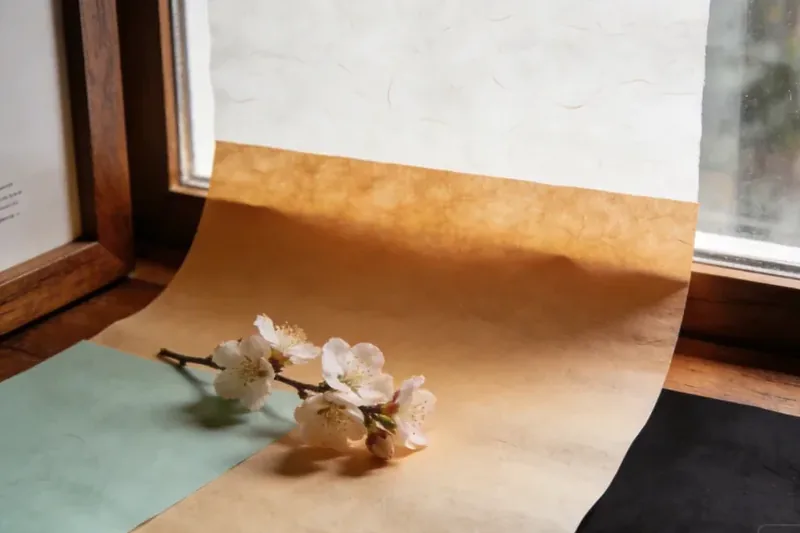
Technical answer: 金银花 — jīnyínhuā in Chinese — is the flower of Lonicera japonica, the Japanese honeysuckle, a twining vine of the honeysuckle family (Caprifoliaceae) native to East Asia. Its sweetly fragrant white-to-yellow flowers are best known as a materia-medica flower (the plant itself is 忍冬 rěndōng), and their use in incense and fragrance is a modern crossover rather than a classical incense-canon material. This page positions it honestly: a sweet floral with a documented materia-medica identity, not a 香乘 ingredient.
Key facts
| Chinese | 金银花 (jīnyínhuā) — “gold-silver flower”; the vine is 忍冬 (rěndōng) |
| Botanical source | Lonicera japonica (family Caprifoliaceae) — the flowers |
| What it is | A flower, not a wood or resin |
| Aroma | Sweet, floral, honeyed, green |
| Traditional role | Materia-medica flower; modern floral note |
What is honeysuckle?
Direct answer: Honeysuckle (金银花, jīnyínhuā) is the flower of Lonicera japonica, the Japanese honeysuckle, a twining vine of the Caprifoliaceae family. Its paired white-to-yellow flowers are sweetly fragrant. It is best known as a materia-medica flower, and its role in incense is a modern crossover from that sweet floral profile — not a classical 香乘 incense-canon ingredient.
Honeysuckle is best understood through an honest positioning: the plant is real, well-documented, and sweetly fragrant, but its incense use is a modern crossover, not a classical canon material. The vine is called 忍冬 (rěndōng), the flower 金银花 (jīnyínhuā, “gold-silver flower,” for its white-to-yellow colour shift), and the two names describe the same species Lonicera japonica. In incense and fragrance, it works as a light, sweet floral top note.
Botanical identity
Direct answer: Lonicera japonica is a twining, semievergreen woody vine of the Caprifoliaceae (honeysuckle) family. Flora of China records ovate to lanceolate leaf blades 3–8 × 1.5–4 cm and fragrant, paired, axillary flowers with a bilabiate white-to-yellow corolla 3–5 cm long. The part used is the flower.
Flora of China records Lonicera japonica as a twining, semievergreen climber whose branches become hollow with age. The leaf blades are ovate, oblong, or lanceolate, 3–8 × 1.5–4 cm. The flowers are fragrant, paired, and axillary, with a bilabiate corolla that is white becoming yellow (or purple outside and white inside), 3–5 cm long. The part used is the flower. See Lonicera japonica in Flora of China and Lonicera japonica on GBIF.
Chinese name and terminology
Direct answer: 金银花 (jīnyínhuā, “gold-silver flower”) and 忍冬 (rěndōng, the vine) are two names for the same species, Lonicera japonica. 金银花 is the flower material; 忍冬 is the vine itself. The English “honeysuckle” spans the whole Lonicera genus, but the Chinese reference is specifically Lonicera japonica.
One plant, two common names:
- 忍冬 (rěndōng) — the vine itself, Lonicera japonica.
- 金银花 (jīnyínhuā) — the flower of that vine, named for its white-to-yellow colour shift (“gold-silver flower”).
Both refer to the same species; 金银花 is the flower material used. The English name “honeysuckle” is shared across the genus Lonicera, but the Chinese incense and materia-medica reference is specifically Lonicera japonica.
Where does honeysuckle come from?
Direct answer: Lonicera japonica is native to East Asia — China, Japan, and Korea — and is now widely naturalised elsewhere. Its supply follows the materia-medica and herb trade rather than a dedicated incense-flower industry.
Lonicera japonica is native to East Asia (including China, Japan, and Korea) and widely naturalised elsewhere. Because 金银花 is a major materia-medica item in China, its supply sits within the herb and materia-medica trade — priced and graded like a medicinal flower, not a specialty incense aromatic.
Aroma profile
Direct answer: Honeysuckle is sweet and honeyed with a green, slightly herbaceous edge — a light, airy floral closer to a honeysuckle hedge in bloom than to an opulent white flower. It is fresher and less heady than jasmine, and in a blend it works as a light sweet-floral top note.
金银花 is sweet and honeyed with a green, slightly herbaceous edge — a light, airy floral closer to a honeysuckle hedge in bloom than to an opulent white flower. It is fresher and less heady than jasmine, with a clean sweetness that reads almost honey-suckle-dewy. Where jasmine reads indolic and heady, and osmanthus reads apricot-sweet, honeysuckle reads light, clean, and honeyed — a note that lifts rather than deepens. In a blend it works as a light sweet-floral top note, adding a gentle honeyed lift rather than deep richness.
Why is it used in incense?
Direct answer: Honeysuckle is used in incense as a modern sweet-floral top note — a crossover from its aromatic and materia-medica profile. It is not a classical 香乘 ingredient; its documented classical identity is as a materia-medica flower, not a 香道 incense material.
Honeysuckle’s incense role is a modern crossover, and the honesty matters:
- Modern floral note: 金银花 works as a light, sweet, honeyed top note in contemporary floral blends.
- Not a 香乘 ingredient: it does not appear in the classical incense compendium 香乘; its role in incense is a modern crossover from its aromatic and materia-medica profile.
This page makes no claim that honeysuckle is a classical incense-canon material.
How is it processed?
Direct answer: Honeysuckle flowers are processed by harvesting the blossoms and drying them — the standard materia-medica preparation. For incense and fragrance, the dried flowers are used whole or ground; the sweet scent is delicate and best preserved by careful, low-heat drying.
The essential step is harvesting the flower buds and open blossoms and drying them — the same preparation used in materia medica. The sweet scent is delicate, so careful, low-heat drying preserves it better than aggressive drying. From there the dried flowers are used whole or ground. For powder buyers, the same practical variables as any floral powder apply: particle size and moisture affect how the material packs, burns, and releases aroma, and the right target depends on the formula. The grinding mechanics sit within the wider how incense is made process, and floral-powder behavior is covered in incense powder & resin.
What determines honeysuckle quality?
Direct answer: Quality turns on clean, whole buds/blooms that retain a sweet, slightly green fragrance. Browned or musty blooms are lower grade. There is no standardized numerical grading; the buyer evaluates the physical condition of the lot.
The practical quality factors, in rough order:
- Aroma — a sweet, honeyed, slightly green scent; the primary indicator.
- Colour and freshness — clean, well-formed buds/blooms, not browned, faded, or musty.
- Cleanliness — freedom from stems, leaves, and foreign matter.
- For powder — consistent particle size and moisture, judged against the specific formula.
Common forms
Direct answer: Honeysuckle is sold as dried whole flowers and as ground powder. Whole flowers serve materia-medica and traditional use and inspection; powder serves incense and fragrance blending — the same material in different physical forms, not a quality distinction.
| Form | Typical use |
|---|---|
| Dried whole flowers | Materia-medica use, inspection |
| Powder | Blended into incense and fragrance |
The distinction is functional, not a quality statement. See incense powder & resin for how floral powder behaves in practice.
In Chinese tradition
- Materia medica: 金银花 is a well-known flower in traditional Chinese medicine (recorded in the 本草 materials), where it is traditionally associated with clearing heat. Traditional Use — traditional materia-medica language, not modern clinical evidence.
- Not a 香乘 incense ingredient: 金银花 does not appear in the classical incense compendium 香乘; its role in incense is a modern crossover from its aromatic and materia-medica profile. Historical Record — documented absence from the classical canon.
- Scented tea and flavouring: the flower is used in some scented teas and herbal drinks for its sweet fragrance. Historical Record — documented culinary/fragrant use.
Traditional use vs modern evidence
The materia-medica identity is documented; its medicinal uses are traditional, not established clinical fact, and we make no medical claims. The documented, non-medical facts are botanical identity, the Caprifoliaceae placement, the 金银花-vs-忍冬 naming, and the sweet honeyed floral aroma.
Honeysuckle vs related florals
Direct answer: Honeysuckle is a light, honeyed, green-sweet floral, distinct from jasmine (indolic, heady) and osmanthus (apricot-sweet). All are flowers, but they occupy different registers: honeysuckle lifts with a clean, dewy sweetness, while jasmine and osmanthus are richer and more heady.
| Floral | Botanical source | Aroma |
|---|---|---|
| Honeysuckle 金银花 | Lonicera japonica, Caprifoliaceae | Sweet, honeyed, green, light |
| Jasmine | Jasminum spp., Oleaceae | Sweet, indolic, heady |
| Osmanthus 桂花 | Osmanthus fragrans, Oleaceae | Sweet, apricot, fruity |
They are distinct flowers in different families (and different registers of sweetness). See jasmine and osmanthus for their own entries.
Adulteration & misidentification
Direct answer: Honeysuckle is not a heavily faked aromatic; its main risk is naming — 金银花 (flower) vs 忍冬 (vine) describe the same plant, and “honeysuckle” spans the whole Lonicera genus. The scientific name (Lonicera japonica) resolves the identity.
Honeysuckle is an inexpensive flower, so adulteration is not the same concern as with agarwood. The real risk is naming: 金银花 and 忍冬 are the same species, and “honeysuckle” is a genus-wide English name. Specifying Lonicera japonica resolves the identity.
What buyers should look for
Direct answer: Buyers should confirm the species (Lonicera japonica) and the flower form, and check for clean, sweet, green-scented blooms with no browning or mustiness. For powder, test particle size and moisture against the formula.
For an incense maker or sourcing buyer:
- Species — confirm Lonicera japonica; “honeysuckle” spans the whole Lonicera genus.
- Form — whole flowers or powder; each behaves differently in a blend.
- Physical condition — clean, sweet, green-scented blooms with no browning or mustiness.
- Powder consistency — confirm particle size and moisture, and test a sample against your formula.
Safety
Incense combustion produces smoke and particulate matter. Burn in a well-ventilated space, avoid inhaling concentrated smoke, and keep away from children and pets. This is editorial knowledge content, not medical advice.
Our Industry View
Direct answer: In manufacturing, honeysuckle is a light sweet-floral top note, not a base — and a modern crossover material, not a classical canon ingredient. Its value is a clean, honeyed lift, but because its scent is delicate, dose and blend context matter more than the nominal name.
From a manufacturing perspective, honeysuckle’s defining traits are lightness and modern crossover status. It supplies a clean, honeyed floral lift that heavier materials cannot, but its scent is delicate and its incense use is modern rather than classical.
Two points follow:
- It is a top note, not a base. Honeysuckle lifts a floral blend but cannot anchor it. A buyer who expects it to lead a fragrance will be disappointed, while one who doses it as a sweet-floral accent gets real value.
- Delicacy is the formulation variable. Because the scent is light, the practical dose and blend context — which depend on formulation — matter more than the nominal name, so a figure that works in one factory does not transfer to another.
In our view, honeysuckle’s commercial value lies in its role as a correctly identified, clean, sweet-floral accent used to lift modern floral blends — a supporting flower whose real value is its clean honeyed character, not intensity.
Summary
Honeysuckle (金银花) is the flower of Lonicera japonica, a twining, semievergreen Caprifoliaceae vine Flora of China records with ovate-lanceolate leaves 3–8 cm and fragrant, paired, white-to-yellow bilabiate flowers 3–5 cm long. The vine is called 忍冬, the flower 金银花 — one species, two names. It is a documented materia-medica flower whose sweet, honeyed, green scent has crossed over into modern incense as a light floral top note, not a classical 香乘 ingredient. Its main identification risk is the genus-wide “honeysuckle” name; commercially, correct identification and clean, fresh blooms outweigh intensity.
FAQ
What is 金银花 (jinyinhua)? The flower of Lonicera japonica, the Japanese honeysuckle, a twining vine of the honeysuckle family (Caprifoliaceae) native to East Asia. Its paired white-to-yellow flowers are sweetly fragrant, and it is best known as a materia-medica flower. The vine itself is called 忍冬 (rěndōng); 金银花 is the flower material.
Is 金银花 the same as 忍冬? They are the same species, Lonicera japonica. 忍冬 is the name of the vine, and 金银花 (“gold-silver flower,” for its white-to-yellow colour shift) is the name of its flower. In incense and materia-medica contexts, 金银花 refers to the flower material.
What does honeysuckle smell like? Sweet and honeyed with a green, slightly herbaceous edge — a light, airy floral like a honeysuckle hedge in bloom. It is fresher and less heady than jasmine, with a clean, dewy sweetness. In a blend it reads as a light sweet-floral top note that lifts rather than deepens.
Is 金银花 a classical incense ingredient? No — it does not appear in the classical incense compendium 香乘. Its use in incense and fragrance is a modern crossover from its sweet aromatic and materia-medica profile. Its documented classical identity is as a materia-medica flower rather than a 香道 incense material.
What is honeysuckle used for besides incense? It is a well-known flower in traditional Chinese medicine, where it is traditionally associated with clearing heat — traditional materia-medica language, not modern clinical evidence. It is also used in some scented teas and herbal drinks for its sweet fragrance. This encyclopedia makes no medical claims.
How does honeysuckle differ from jasmine and osmanthus? They are distinct flowers in different registers of sweetness. Honeysuckle (Lonicera japonica) is light, honeyed, and green; jasmine (Jasminum spp.) is sweet, indolic, and heady; osmanthus (Osmanthus fragrans) is sweet and apricot-fruity. Honeysuckle is the freshest and least heady of the three.
See also: chrysanthemum, plum-blossom, jasmine, osmanthus, silk tree flower and the full scent guide.
Evidence & Sources
Botanical identity
Source: Lonicera japonica in Flora of China · Lonicera japonica on GBIF. Evidence type: Established.
Traditional Chinese use
Source: 金银花 as a materia-medica flower; no entry in the classical compendium 香乘. Evidence type: Historically documented — traditional materia-medica language, not modern clinical evidence.
Authenticity / disambiguation
Source: 金银花 (flower) vs 忍冬 (vine) — same species Lonicera japonica, different plant parts named; “honeysuckle” spans the genus Lonicera. Evidence type: Practical screening.
Safety
Source: incense combustion produces smoke and particulate matter; burn in a well-ventilated space. Evidence type: Established.
Evidence status
| Layer | Status |
|---|---|
| Botanical identity | Established |
| Traditional use | Historically documented |
| Authenticity test | Practical screening |
| Health claims | Not established |
Sources
Sources: botanical references on Lonicera japonica and the jinyinhua-vs-rendong naming note. 金银花 is a documented materia-medica flower; medicinal uses are treated as traditional, not established clinical fact. This is editorial knowledge content, not medical advice.