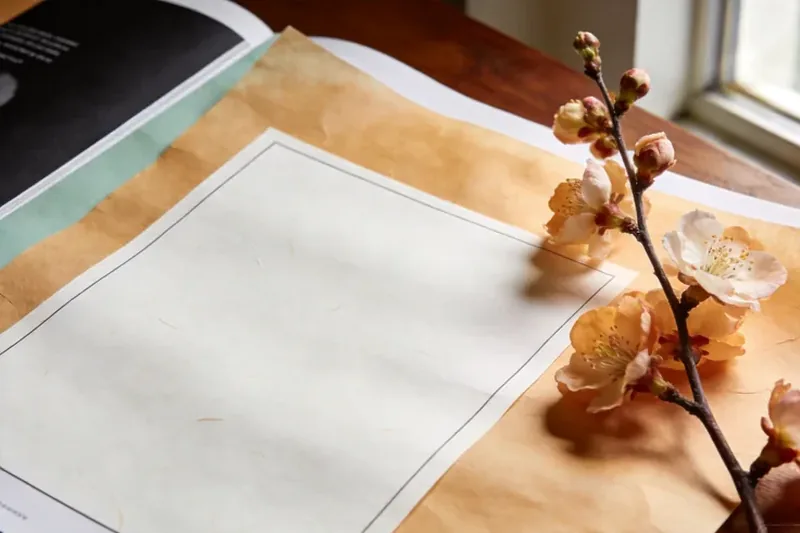
Direct answer: Orchid (兰花, lánhuā) is the flower of the Cymbidium orchids, principally Cymbidium ensifolium, an orchid (Orchidaceae) cultivated in China for its delicate, refined fragrance. In Chinese culture the orchid is one of the Four Gentlemen (四君子) and its scent is the classical model of the refined, understated floral. In incense it is a delicate floral reference and a 清供 (scholar’s-table offering) flower.
Key facts
| Chinese | 兰花 (lánhuā); also 兰 |
| Botanical source | Cymbidium ensifolium (family Orchidaceae) — the flower |
| What it is | A fragrant flower, not a wood or resin |
| Aroma | Floral, sweet, green, delicate |
| Traditional role | 清供 offering flower; refined floral reference |
Aroma profile
Direct answer: Orchid is a delicate, refined floral — sweet and green with a quiet, understated character that is the opposite of a heady white-floral. The Cymbidium scent is subtle and needs proximity; it is a cultured fragrance, experienced up close rather than filling a room, and in incense it appears as a delicate floral reference rather than a heavy burned material.
Orchid is a delicate, refined floral — sweet and green with a quiet, understated character that is the opposite of a heady white-floral. The Cymbidium scent is subtle and needs proximity; it is a cultured fragrance, experienced up close rather than filling a room. In incense it appears as a delicate floral reference, and in classical pairing it was matched with refined incenses rather than burned heavily in its own right. The subtlety is the entire cultural point: the orchid’s understated scent is prized precisely because it does not shout — the aesthetic of the scholar’s table, not the marketplace.
A naming caution (read this)
Direct answer: 兰花 (orchid) must be kept distinct from the other plants that share the 兰 character. 兰花 is the Cymbidium orchid flower (Orchidaceae); 白兰花 is the white champaca (Michelia alba, Magnoliaceae); 玉兰 is the yulan magnolia (Magnolia denudata); and 佩兰 is eupatorium (Eupatorium fortunei, Asteraceae). The shared 兰 character connects unrelated plants.
兰花 (orchid) must be kept distinct from the other plants that share the 兰 character in Chinese fragrance:
- 兰花 (orchid) — Cymbidium ensifolium (Orchidaceae), the refined orchid flower. This entry.
- 白兰花 (champaca) — Michelia alba (syn. Magnolia × alba, Magnoliaceae), the white champaca, a different, heady flower that also carries 兰 in its name. Its own entry.
- 玉兰 (yulan magnolia) — Magnolia denudata (Magnoliaceae), another white magnolia. Its own entry.
- 佩兰 (eupatorium) — Eupatorium fortunei (Asteraceae), a herb whose 兰 name is unrelated to the orchid flower. Its own entry.
This page describes 兰花 = the Cymbidium orchid flower. The shared 兰 character connects unrelated plants, and each has its own entry. Note that here 兰花 is the true orchid (Orchidaceae), unlike 含笑花, 白兰花, 玉兰, and 米仔兰, which borrow the character without being orchids.
Botanical source and origin
Direct answer: Cymbidium ensifolium is a terrestrial orchid of the orchid family (Orchidaceae), native to East and Southeast Asia and long cultivated in China for its flowers. The genus Cymbidium includes many fragrant cultivated orchids; Cymbidium ensifolium is among the most fragrant and a mainstay of Chinese orchid culture. The part used is the delicate flower.
Cymbidium ensifolium is a terrestrial orchid of the orchid family (Orchidaceae), native to East and Southeast Asia and long cultivated in China for its flowers. The genus Cymbidium includes many cultivated orchids prized for their fragrance; Cymbidium ensifolium is among the most fragrant and is a mainstay of Chinese orchid culture. The part used is the flower, which is subtle and delicate rather than heavy. This is the true orchid of the group — the botanical Orchidaceae — in contrast to the many 兰-named flowers that are not orchids at all.
Where does orchid come from?
Direct answer: Cymbidium ensifolium is native to East and Southeast Asia, where it has long been cultivated in China as one of the classic fragrant orchids of the scholar’s garden. It is a cultivated orchid prized for its delicate scent, not a scarce wild incense material.
The Cymbidium orchids range across East and Southeast Asia, and Cymbidium ensifolium in particular has been cultivated in China for centuries as one of the classic fragrant orchids of the scholar’s garden. It is a cultivated plant prized for its refined, up-close fragrance rather than a wild-harvested incense material. Its cultural role — the orchid of the Four Gentlemen, the 清供 offering — is rooted in this cultivated, garden presence, which is exactly why it reads as a refined reference rather than a commodity.
In Chinese tradition
Direct answer: 兰花 is a classical 清供 (scholar’s-table offering) flower and one of the Four Gentlemen (四君子) — the classical symbols of the cultivated scholar — and the Ming Xiangcheng (香乘) records the orchid–incense pairing (兰宜四絶), matching the orchid with refined incenses rather than burning the flower itself.
- 清供 (scholar’s-table offering): 兰花 is a classical 清供 flower, displayed for its refined fragrance and cultural meaning.
- Four Gentlemen: the orchid is one of the 四君子 (plum, orchid, bamboo, chrysanthemum), the classical symbols of the cultivated scholar.
- Incense pairing: the Ming-dynasty Xiangcheng (香乘) records 韩熙载’s observation that orchid pairs with specific refined incenses — “兰花 is suited to 四絶 [incense]” (兰宜四絶) — a flower-to-incense pairing, not a burned orchid material.
Traditional use vs modern evidence
Direct answer: The 清供 and cultural use is well documented, and the botanical identity (Orchidaceae) is established. The orchid is a refined floral reference and a cultural symbol, not a burned incense material, and this page makes no medical claims.
- Traditional Use — 兰花 as a 清供 offering flower and a refined floral reference, valued for its understated scent; this is aromatic and cultural use, not medical.
- Historical Record — the Four Gentlemen (四君子) symbolism and the Ming Xiangcheng (香乘) orchid–incense pairing (兰宜四絶) are documented classical records.
- Scientific Evidence — botanical identity (Orchidaceae, Cymbidium ensifolium) is established, including the orchid’s status as the true botanical orchid among the 兰-named flowers; no medical claims are made.
How is orchid used in incense?
Direct answer: Orchid is not burned heavily as an incense material; it is a delicate floral reference and a 清供 flower. In the classical record it appears in flower-to-incense pairings (兰宜四絶) rather than as a dominant burned ingredient, and its subtle scent is enjoyed up close rather than through combustion.
The orchid’s incense role is a reference, not a material. Its delicate, understated scent does not suit heavy burning, and its classical appearances are pairings — the Xiangcheng recording that orchid suits certain refined incenses (兰宜四絶) — rather than a role as a burned ingredient in its own right. The aesthetic is one of restraint: the orchid’s value is the idea and the up-close fragrance of a refined flower, curated as a 清供 offering and matched to incense conceptually, not combusted. A formulator should understand orchid as a cultural and olfactory reference rather than a botanical material to dose into a stick.
What buyers should look for
Direct answer: A buyer should distinguish 兰花 (the Cymbidium orchid, Orchidaceae) from 白兰花 (champaca) and 玉兰 (yulan magnolia), which share the 兰 character but are magnolias. The orchid’s scent is subtle and up-close; in incense it is a delicate floral reference, not a heavy burned material, and it is a cultural symbol first, a fragrance ingredient second.
For a sourcing buyer, the checks are:
- Species — confirm Cymbidium ensifolium (Orchidaceae), the true orchid; distinguish it from 白兰花 (champaca) and 玉兰 (yulan magnolia), which are magnolias despite the shared 兰 character.
- Aroma — expect a delicate, refined, sweet-green floral, subtle and up-close rather than room-filling.
- Role — it is a 清供 flower and a cultural symbol first, a fragrance ingredient second; in incense it is a reference, not a burned material.
- Format — for modern fragrance, “orchid” usually names a synthetic accord; the living flower’s scent is a garden and cultural matter.
Our Industry View
Direct answer: Orchid’s lesson is that incense culture is partly an aesthetic of restraint, not just a catalog of materials. The orchid is prized for being understated — a refined, up-close scent matched conceptually to incense (兰宜四絶) rather than burned — so its value is cultural and olfactory-reference, not extractive. This is the opposite of a commodity material, and it is a reminder that some entries in the fragrance canon are ideas, not ingredients.
Orchid is the entry where the aesthetic dimension of incense culture is most visible, and it is worth stating plainly:
- Restraint is a value, not a defect. The orchid’s subtle, up-close fragrance is prized precisely because it does not fill a room. In classical incense aesthetics, understatement is a virtue — the refined floral that rewards proximity — which is why the orchid is matched to incense conceptually (兰宜四绝) rather than burned.
- Some canon entries are references, not materials. Like 含笑花’s 含笑宜麝, the orchid’s 兰宜四絶 is a pairing judgment, not a “use as a 香材.” Recognizing that the classical record contains aesthetic pairings as well as material uses is part of reading it accurately — and it protects against inflating a cultural reference into an ingredient.
- The 兰 character reaches its limit here. 兰花 is the one true orchid in the 兰-named set, which is why the disambiguation matters: the character points to a refined fragrance ideal, not to a botanical family, and only the species tells you which plant you actually have.
In our view, orchid is best understood as a cultural and olfactory reference — the refined floral of the scholar’s table — whose incense value is aesthetic rather than extractive, and whose lesson is that restraint and conceptual pairing are genuine parts of the fragrance canon.
Summary
兰花 (Cymbidium ensifolium) is the true orchid of Chinese fragrance culture — an Orchidaceae flower prized for a delicate, refined, understated scent that is the classical model of the cultivated floral. It is one of the Four Gentlemen (四君子) and a 清供 offering flower, and the Ming Xiangcheng (香乘) records its pairing with refined incenses (兰宜四絶) — a conceptual reference rather than a burned material. Its lesson is that incense culture includes an aesthetic of restraint: the orchid’s value is in its quiet, up-close fragrance and its cultural symbolism, not in extraction or combustion.
FAQ
What is 兰花 (orchid)? The flower of the Cymbidium orchids, principally Cymbidium ensifolium, an orchid (Orchidaceae) cultivated in China for its delicate, refined fragrance. It is one of the Four Gentlemen (四君子) and its scent is the classical model of the refined, understated floral — a 清供 offering flower and a delicate incense reference rather than a heavy burned material.
Is 兰花 the same as 白兰花 (champaca)? No. 兰花 is the Cymbidium orchid flower (Orchidaceae), while 白兰花 is the white champaca (Michelia alba, Magnoliaceae), a different, heady flower that also carries 兰 in its name. The shared 兰 character connects unrelated plants, and each has its own entry here.
What does orchid smell like? Delicate and refined — sweet and green with a quiet, understated character, the opposite of a heady white-floral. The Cymbidium scent is subtle and needs proximity; it is a cultured fragrance experienced up close rather than filling a room.
How is orchid used in Chinese culture? As a 清供 (scholar’s-table offering) flower, displayed for its refined fragrance; as one of the Four Gentlemen (四君子), the classical symbols of the cultivated scholar; and in classical flower-to-incense pairing — the Ming-dynasty Xiangcheng (香乘) records that orchid is suited to specific refined incenses (兰宜四絶).
Is orchid burned as incense? Not heavily. The orchid is a delicate floral reference and a 清供 flower, not a material burned in its own right. In the classical record it appears in flower-to-incense pairings rather than as a dominant burned ingredient.
Is 兰花 the only true orchid among the 兰-named flowers? In this encyclopedia’s 兰-named set, yes. 兰花 (Cymbidium ensifolium) is the botanical orchid (Orchidaceae), while 白兰花 (champaca), 玉兰 (yulan magnolia), and 米仔兰 (aglaia) all carry the 兰 character but belong to other families. The character is a fragrance honorific; the species is the botanical truth.
See also: champaca, osmanthus, chrysanthemum, yulan-magnolia, eupatorium and the full scent guide.
Evidence & Sources
Botanical identity
Source: Cymbidium ensifolium in Flora of China · Cymbidium ensifolium on GBIF. Evidence type: Established.
Traditional Chinese use
Source: 兰花 as a 清供 flower and one of the Four Gentlemen; the Ming-dynasty Xiangcheng (香乘) records the orchid–incense pairing (兰宜四絶). Evidence type: Historically documented — cultural and aromatic use, not medical.
Authenticity / disambiguation
Source: 兰花 (Cymbidium ensifolium, orchid) vs 白兰花 (Michelia alba, champaca) vs 玉兰 (Magnolia denudata) vs 佩兰 (Eupatorium fortunei). Evidence type: Practical screening.
Safety
Source: incense combustion produces smoke and particulate matter; burn in a well-ventilated space. Evidence type: Established.
Evidence status
| Layer | Status |
|---|---|
| Botanical identity | Established |
| Traditional use | Historically documented |
| Authenticity test | Practical screening |
| Health claims | Not established |
Sources
Sources: botanical references on Cymbidium ensifolium and the orchid/champaca/yulan/eupatorium naming distinction. The orchid’s 清供 and cultural use is documented; no medical claims are made. This is editorial knowledge content, not medical advice.