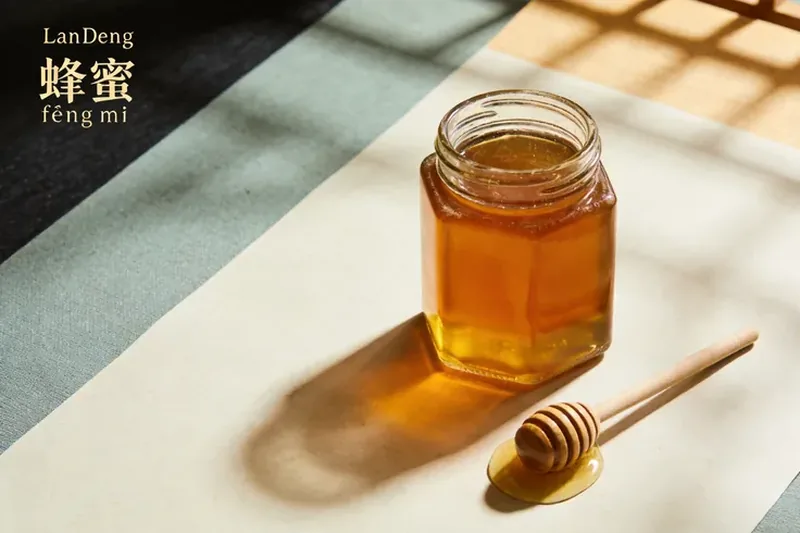
Direct answer: Honey (蜂蜜, fēngmì) is the nectar-derived product of the honey bee (Apis mellifera), a bee product rather than a botanical. In Chinese incense it is not a fragrance in itself but the classical binder of 合香 (blended incense): the Ming Xiangcheng (香乘) repeatedly specifies honey as the agent that binds ground incense powders into pills and cakes — “以蜜和香” (use honey to blend the incense).
Key facts
| Chinese | 蜂蜜 (fēngmì) — “honey” |
| Source | Apis mellifera (honey bee) — a bee product, not botanical |
| What it is | A natural binder, not a burned fragrance |
| Aroma | Sweet, floral, warm, faintly caramel |
| Traditional role | 合香 binder (以蜜和香); also 炼蜜 (refined honey) |
Aroma profile
Honey is sweet and floral, warm and faintly caramel, with a soft, rounded character. In incense its scent is secondary — when it does register, it reads as a gentle, sweet warmth that softens the burn rather than adding a distinct note. Its real function is physical: honey binds loose incense powder into a workable dough that can be shaped into pills or cakes and, once dried, holds its form for burning.
The binder, not the scent (read this)
蜂蜜 belongs to the process side of classical incense, not the fragrance side. In the 香乘 the compounding principle is 君臣佐使 (sovereign–minister–assistant–guide), and the guide (使) is frequently a binder — honey, makko, or musk — that fixes the powder and carries the burn. The 香乘 formula for 江南李主帐中香 (Jiangnan Li Zhu bedchamber incense), for example, records the ingredients “沉香、檀香、乳香、琥珀、蜂蜜、茉莉花” — agarwood, sandalwood, frankincense, amber, honey, jasmine — with the instruction to bind the ground materials in honey, roll into pills, and coat the outside with dried jasmine. Honey is the structural ingredient; the scent comes from the others.
Botanical source and origin
Honey is produced by honey bees, chiefly the Western honey bee Apis mellifera, from flower nectar. It is an animal-derived product, not a plant material, and so sits outside the botanical encyclopedia proper — but it is indispensable to the classical incense craft precisely because it is not a scent: it is a clean, sweet binder that does not intrude on the fragrance. The classical manuals also distinguish 生蜜 (raw honey) from 炼蜜 (refined honey, simmered to remove foam and excess water), the latter preferred for incense because it stores and binds better.
In Chinese tradition
- 合香 binder: honey is the classical binding agent of blended incense, recorded throughout 香乘 as the medium that forms powders into pills and cakes (以蜜和香).
- 炼蜜 (refined honey): the manuals specify simmering honey to remove foam and water before use, producing a more stable binder.
- Not a scent: honey’s role is structural; the fragrance of a 合香 formula comes from the aromatic ingredients, not from the binder.
Traditional use vs modern evidence
The binding use is documented in the classical manuals. We make no medical claims about honey here. The documented, non-medical facts are the bee origin, the animal-derived (non-botanical) classification, and the binder role in 合香.
Quality and sourcing notes
Practical points for buyers:
- 蜂蜜 in incense is a binder, not a fragrance — expect it to hold a formula together, not to scent it.
- Classical manuals prefer 炼蜜 (refined honey) over 生蜜 (raw honey): simmering removes foam and excess water for a more stable, better-storing binder.
- Honey is a bee product, not a botanical; it belongs to the animal-derived side of the incense craft.
Safety
Incense combustion produces smoke and particulate matter. Burn in a well-ventilated space, avoid inhaling concentrated smoke, and keep away from children and pets. This is editorial knowledge content, not medical advice.
FAQ
What is honey’s role in Chinese incense? Honey is the classical binder of 合香 (blended incense), not a fragrance. The Ming-dynasty Xiangcheng (香乘) specifies honey as the agent that binds ground incense powders into pills and cakes — “以蜜和香” (use honey to blend the incense) — a structural material rather than a scent.
Is honey a botanical ingredient? No. Honey is a bee product, produced by the honey bee (Apis mellifera) from flower nectar. It is animal-derived, not a plant material, and sits outside the botanical encyclopedia proper — though it is indispensable to the incense craft precisely as a clean, non-intrusive binder.
What does honey smell like in incense? Sweet and floral, warm and faintly caramel, but its scent is secondary. When it registers, honey reads as a gentle, sweet warmth that softens the burn rather than adding a distinct note. Its real function is physical — binding loose powder into a workable dough.
What is 炼蜜 (refined honey)? Refined honey, prepared by simmering raw honey (生蜜) to remove foam and excess water. The classical manuals prefer 炼蜜 for incense because it stores better and binds more stably than raw honey, producing pills and cakes that hold their form.
How does honey fit the 君臣佐使 (sovereign–minister–assistant–guide) principle? Honey is typically the guide (使) — the binder or fixative that holds a formula together and carries the burn. The fragrance comes from the principal and supporting aromatics; honey’s job is structural. For example, the 香乘 records 江南李主帐中香 with agarwood, sandalwood, frankincense, amber, and jasmine bound in honey and coated with dried jasmine.
See also: hexiang-blending-system, musk, beeswax and the full scent guide.
Evidence & Sources
Botanical identity
Source: Apis mellifera (Western honey bee) on GBIF. Evidence type: Established — animal-derived (bee product), not botanical.
Traditional Chinese use
Source: the Ming-dynasty Xiangcheng (香乘) records honey as the binding agent in 合香 formulas (以蜜和香), including 江南李主帐中香 (沉香、檀香、乳香、琥珀、蜂蜜、茉莉花) and the use of 炼蜜 (refined honey). Evidence type: Historically documented — structural/binding use.
Authenticity / disambiguation
Source: honey as a bee product (animal-derived, not botanical) vs botanical incense materials. Evidence type: Practical screening.
Safety
Source: incense combustion produces smoke and particulate matter; burn in a well-ventilated space. Evidence type: Established.
Evidence status
| Layer | Status |
|---|---|
| Source identity | Established (bee product) |
| Traditional use | Historically documented (binder) |
| Authenticity test | Practical screening |
| Health claims | Not established |
Sources
Sources: the Western honey bee Apis mellifera as the source of honey, and the Ming-dynasty Xiangcheng (香乘) record of honey as the 合香 binder (以蜜和香). Honey is a bee product, not a botanical; no medical claims are made. This is editorial knowledge content, not medical advice.