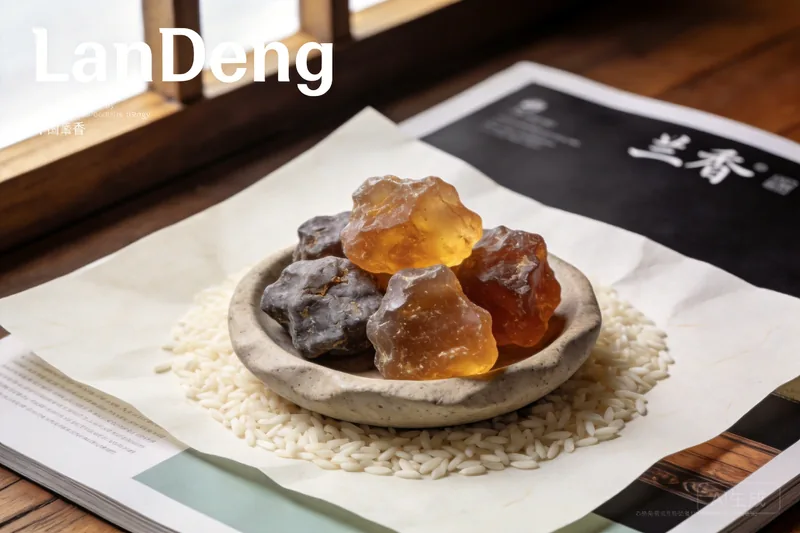
Key takeaway: Ambergris — lóngxiánxiāng (龙涎香, “dragon-spittle fragrance”) in Chinese — is a waxy secretion produced in the digestive system of the sperm whale (Physeter macrocephalus). It is prized as a fixative in perfumery and traditional incense, with a marine, sweet, earthy scent. Unlike most incense ingredients, it is animal-derived, not botanical.
Key facts
| Chinese | 龙涎香 (lóngxiánxiāng) |
| Source | Sperm whale (Physeter macrocephalus) — an animal secretion |
| What it is | A waxy, fatty secretion (not a plant, wood, or resin) |
| Aroma | Marine, sweet, earthy, waxy (aged) |
| Traditional role | Perfume fixative, traditional incense, materia medica |
Aroma profile
Fresh ambergris has a marine, slightly fecal character; as it ages and oxidizes, it develops the prized sweet, earthy, waxy-amber scent that made it a legendary perfumery fixative. It is valued less as a loud note than for its ability to anchor and extend other aromas.
The “not botanical” point (read this)
Ambergris is the one ingredient in this encyclopedia that is not a plant. It is an animal product, which matters for two reasons:
- Sourcing — ambergris trade is restricted (the sperm whale is CITES-listed), and most “ambergris” on the market today is synthetic (ambroxide / ambreine and related compounds), not the natural secretion.
- Category — a “botanical incense” that includes ambergris is stretching its own definition; most contemporary incense uses the synthetic fixative instead.
This is a sourcing and category fact, not a health claim.
In Chinese tradition
- Traditional incense: 龙涎香 appears in classical Chinese incense and materia medica as a rare, precious fixative.
- Perfumery: ambergris (and, today, its synthetic replacements) is a legendary fixative that extends and rounds a fragrance.
- Rarity: natural ambergris is scarce, which is why it has always been associated with luxury and, today, is largely replaced by synthetics.
Traditional use vs modern evidence
Ambergris appears in traditional Chinese medicine with various described uses. We treat these as traditional, not established clinical fact, and make no medical claims. This page describes its aromatic and fixative role only.
Safety
Incense combustion produces smoke and particulate matter; burn in a well-ventilated space and avoid inhaling concentrated smoke. Note that most “ambergris” in incense is synthetic, which is a sourcing matter, not a safety claim. This is editorial knowledge content, not medical advice.
FAQ
Is ambergris a plant? No — ambergris is not botanical. It is a waxy secretion produced in the digestive system of the sperm whale (Physeter macrocephalus). This makes it unique among the ingredients in this encyclopedia: everything else comes from plants, woods, or resins, while ambergris is animal-derived. The distinction matters for sourcing and for labeling — a “botanical incense” that includes natural ambergris is stretching its own definition, and most contemporary products use a synthetic substitute instead.
Is ambergris still used today? Natural ambergris is still used, but rarely. It is scarce — produced by only a small fraction of sperm whales and usually found washed ashore — and the sperm whale is CITES-listed, which restricts trade. As a result, most “ambergris” in modern fragrance and incense is a synthetic substitute such as ambroxide or ambreine, which reproduces the fixative and amber character without the animal source. When a label says “ambergris,” it usually means the synthetic compound rather than the natural secretion.
What does ambergris smell like? Fresh ambergris has a marine, slightly animalic — even fecal — character. As it ages and oxidizes, exposed to air and seawater, it develops the prized sweet, earthy, waxy-amber scent that made it a legendary perfumery fixative. The value lies less in a loud single note than in its ability to anchor and extend other aromas, adding warmth and depth to a blend. The aged, oxidized material is considered far superior to the fresh secretion.
What is the synthetic substitute for ambergris? The main synthetic substitutes are ambroxide (also called ambroxan) and ambreine, compounds that reproduce ambergris’s fixative and warm amber character without any animal source. These synthetics are inexpensive, consistent, and legal to trade, which is why they dominate modern perfumery and incense. They are widely described as “ambergris” or “amber” notes. Chemically they are related to ambrein, the key odor-bearing compound in natural ambergris, but they are produced in the laboratory rather than harvested from whales.
Why is ambergris so expensive? Natural ambergris is expensive because it is rare and difficult to obtain. Only a small fraction of sperm whales produce it, and the material is usually found washed ashore or floating at sea rather than harvested deliberately, making supply unpredictable. Trade is restricted because the sperm whale is CITES-listed. Scarcity, combined with the fixative’s unmatched ability to extend a fragrance, drives the price. Genuine aged ambergris can command very high prices, while synthetic substitutes are inexpensive.
See also: sandalwood, agarwood, and the full scent guide.
Evidence & Sources
Botanical identity
Source: Physeter macrocephalus (sperm whale) on GBIF · Physeter macrocephalus in the CITES species checklist — ambergris is an animal secretion, not botanical. Evidence type: Established.
Traditional Chinese use
Source: 本草綱目 (Bencao Gangmu) full text on Wikisource and this page’s record that 龙涎香 appears in classical Chinese incense and materia medica as a rare, precious fixative. Evidence type: Historically documented — traditional materia-medica language, not modern clinical evidence.
Commercial grading
Source: the natural-vs-synthetic market note (ambroxide / ambreine) and the sperm whale’s CITES trade listing. Evidence type: Trade terminology.
Authenticity / adulteration
Source: most “ambergris” on the market today is synthetic, not the natural secretion — a sourcing point, not a health claim. Evidence type: Practical screening.
Safety
Source: incense combustion produces smoke and particulate matter; burn in a well-ventilated space. Evidence type: Established.
Evidence status
| Layer | Status |
|---|---|
| Botanical identity | Established |
| Traditional use | Historically documented |
| Commercial grading | Trade terminology |
| Authenticity test | Practical screening |
| Health claims | Not established |
Sources
- Physeter macrocephalus (sperm whale) on GBIF
- Physeter macrocephalus in the CITES species checklist
- Bencao Gangmu (本草綱目) full text on Wikisource
Sources: references on ambergris (sperm whale secretion, aging/oxidation, fixative role, CITES trade status, and synthetic substitutes ambroxide/ambreine). Medicinal uses are treated as traditional, not established clinical fact. This is editorial knowledge content, not medical advice.