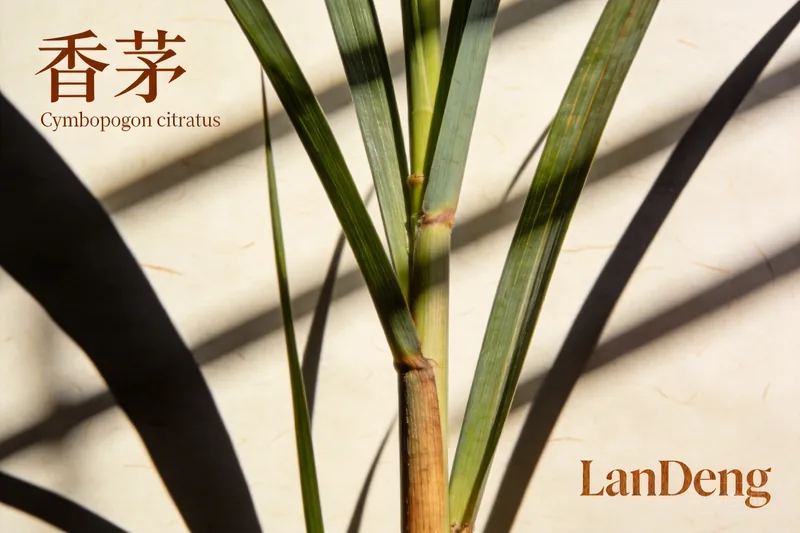
Technical answer: Citronella — xiāngmáo (香茅) in Chinese — is the fragrant leaf of Cymbopogon citratus, a tropical grass of the Poaceae family, better known in English as lemongrass. It is a bright, citrusy, lemony aromatic used across Southeast Asian cooking, and it appears in incense as a fresh, clean top note and as a traditional insect-repelling scent. Strictly, the essential oil sold as “citronella oil” often comes from a close relative (Cymbopogon nardus or C. winterianus), while Cymbopogon citratus is the lemongrass of the kitchen — a distinction worth noting.
Key facts
| Chinese | 香茅 (xiāngmáo), “fragrant grass”; also 柠檬香茅 |
| Botanical source | Cymbopogon citratus (family Poaceae) — the leaf |
| What it is | A fragrant tropical grass, used fresh or dried |
| Aroma | Citrusy, lemony, fresh, green-grassy |
| Traditional role | Fresh top note, insect-repelling scent, culinary herb |
Aroma profile
Lemongrass is bright and citrusy — a clean, lemony, slightly green-grassy scent driven by the aromatic citral. It is a top note, the kind of fresh, lively scent that lifts a blend immediately but fades fastest. In incense it adds a clean, zesty brightness; it is more at home in fresh, modern, and mosquito-repelling incense than in heavy classical wood-and-resin blends.
Botanical source and origin
Cymbopogon citratus is a clumping tropical grass native to Southeast Asia, now cultivated throughout the tropics and subtropics. The part used is the leaf, which is packed with citral-rich essential oil. It is the “lemongrass” of Thai and Vietnamese cooking.
A naming caution: “Citronella” and “lemongrass” overlap but are not identical. Cymbopogon citratus is lemongrass (香茅); “citronella oil” for insect repellent is more often distilled from Cymbopogon nardus or C. winterianus. Both are fragrant Cymbopogon grasses with a citrus character, but the species and the product differ.
In Chinese tradition
- Fresh aromatic and insect repellent: 香茅’s lemony scent is used to freshen spaces and to repel insects — a practical aromatic role shared with other citronella grasses.
- Culinary: lemongrass is a defining herb of Southeast Asian cuisine, and its use in southern Chinese and diaspora cooking is well established.
- Incense context: 香茅 appears in incense as a fresh, clean, citrussy top note, most common in modern and insect-repelling incense rather than classical 合香 formulas.
- Materia medica: 香茅 has traditional aromatic uses. This is traditional materia-medica language, not modern clinical evidence.
Traditional use vs modern evidence
The culinary and insect-repelling roles are well documented. Any medicinal use is traditional, not established clinical fact, and we make no medical claims. The documented, non-medical facts are botanical identity, the citral-rich leaf, and its use as a fresh, clean fragrance.
Quality and sourcing notes
Practical points for buyers:
- Fresh or dried lemongrass should be strongly lemony; the scent is the main quality indicator.
- Distinguish 香茅 (Cymbopogon citratus, lemongrass) from other citronella grasses (C. nardus, C. winterianus) — related but different species and products.
- In incense, lemongrass is a bright top note, usually blended and used sparingly.
Safety
Incense combustion produces smoke and particulate matter. Burn in a well-ventilated space, avoid inhaling concentrated smoke, and keep away from children and pets. This is editorial knowledge content, not medical advice.
FAQ
Is citronella the same as lemongrass? Related but not identical. Lemongrass is Cymbopogon citratus (香茅), the culinary grass of Southeast Asian cooking. “Citronella oil” for insect repellent is more often distilled from Cymbopogon nardus or C. winterianus. All are fragrant citrus-scented grasses of the same genus, but the species — and therefore the product — differ, and the two names are worth distinguishing.
What does lemongrass smell like? Bright, clean, and lemony — a citrusy, slightly green-grassy scent driven by the aromatic citral. It is a top note: the fresh, lively lift that arrives first and fades fastest in a blend. In incense it adds a zesty, modern brightness rather than a heavy classical wood or resin character.
Is 香茅 a Chinese incense ingredient? It is used in incense as a fresh, clean, citrussy top note, most common in modern and insect-repelling incense rather than the heavy classical 合香 blends of woods and resins. Its defining identity is culinary — lemongrass is a staple of Southeast Asian cooking — and its incense use is a fresh, modern crossover of that bright lemony character.
Why is lemongrass used to repel insects? Because of its strong citral-rich lemony scent, which is why citronella grasses are distilled into insect-repelling oils. Lemongrass (Cymbopogon citratus) shares this practical role with the citronella grasses (C. nardus, C. winterianus) used for citronella oil. The repellent role is a practical aromatic use, not a medical claim.
What part of the plant is used? The leaf. Lemongrass leaves are packed with essential oil rich in citral, which gives the lemony scent. The leaves are used fresh in cooking, dried, or distilled for oil. The quality indicator is the strength of the lemony aroma, and in incense the material is a bright, sparingly-used top note.
See also: patchouli, agastache-rugosa, and the full scent guide.
Evidence & Sources
Botanical identity
Source: Cymbopogon citratus in Flora of China · Cymbopogon citratus on GBIF. Evidence type: Established.
Traditional Chinese use
Source: 香茅 as a fresh aromatic, insect-repelling scent, and culinary herb. Evidence type: Historically documented — aromatic and culinary use, not medical.
Authenticity / disambiguation
Source: lemongrass (Cymbopogon citratus) vs citronella grasses (C. nardus, C. winterianus). Evidence type: Practical screening.
Safety
Source: incense combustion produces smoke and particulate matter; burn in a well-ventilated space. Evidence type: Established.
Evidence status
| Layer | Status |
|---|---|
| Botanical identity | Established |
| Traditional use | Historically documented |
| Authenticity test | Practical screening |
| Health claims | Not established |
Sources
Sources: botanical references on Cymbopogon citratus and the lemongrass-vs-citronella distinction. Lemongrass is recorded as a culinary and insect-repelling aromatic; any medicinal use is treated as traditional, not established clinical fact. This is editorial knowledge content, not medical advice.